
PaperValue chains and food waste
Environmental farm plans and what food buyers ask of farms
Food companies want proof that farms are run sustainably. How Ontario's voluntary Environmental Farm Plan works, and whether it can serve as that proof.
 By Annelies DekkerFirst posted at this address on 5 min read
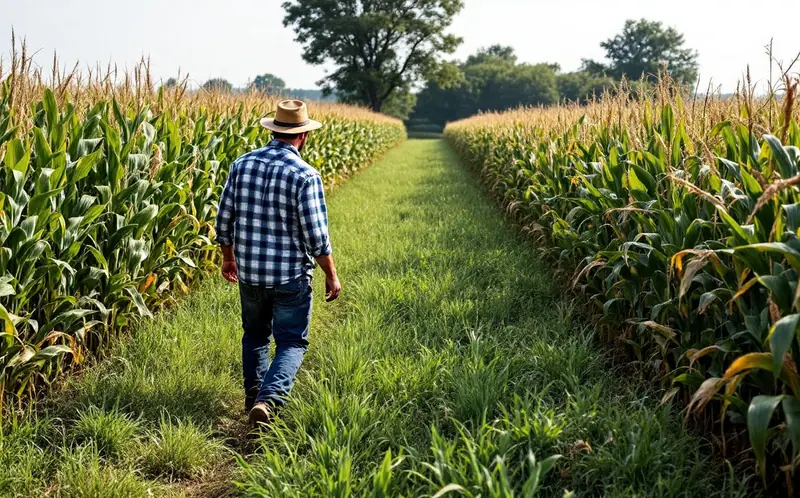
Food buyers used to ask farms two questions: how much, and at what price. Quality and food safety came next. A newer set of questions concerns how the food was produced: water, soil, fertilizer, pesticides, energy and wildlife. Large retailers and food manufacturers increasingly want evidence from their suppliers, and their suppliers turn to farms for it. In Ontario, farmers already have a long-standing tool that covers much of this ground, the Environmental Farm Plan. Whether it can answer what buyers are asking is a practical question worth working through.
A short history of the Ontario plan
The Environmental Farm Plan, or EFP, began in Ontario in 1993. It was developed by a coalition of provincial farm organizations, with government support, as a farmer-led alternative to more regulation. The idea was simple: if farmers assessed the environmental risks on their own operations and made plans to address them, they could reduce pollution and improve their practices without a rulebook for every farm.
The Ontario Soil and Crop Improvement Association (OSCIA), a farmer organization with local branches across the province, was chosen to deliver the program and has done so since its first year. Funding has come through federal and provincial agriculture agreements. Over the years the workbook has been revised several times to reflect new science and new rules, and other provinces developed environmental farm plans of their own, often modelled on Ontario's.
How the plan works, step by step
The Ontario EFP follows a set sequence. Every step is voluntary.
- A farmer signs up for a free workshop run locally by OSCIA. The workshop is delivered in two sessions, with time between them to work on the farm's own assessment.
- At the first session the farmer receives the EFP workbook, which contains a series of worksheets. Each covers one topic, such as water wells, fuel storage, pesticide handling and storage, manure and nutrient management, soil management, and the farm's surroundings. The farmer fills in only those that apply.
- Back on the farm, the farmer rates each item on a scale from low to high risk. A well close to a fuel tank, for instance, would rate as a high risk.
- At the second session the farmer draws up an action plan: which risks to address, how, and by when.
- The action plan is submitted for confidential review. When it is accepted, the farmer receives a certificate of completion.
- The farmer carries out the plan over time.
Confidentiality is central. The self-assessment stays with the farmer, and the review checks that the action plan is reasonable, not that the farm is in any particular state. A completed EFP has commonly been a condition for applying to government cost-share programs that help pay for projects such as upgraded manure storage, well protection or erosion control.
Why food buyers ask for sustainability evidence
Several pressures push large food companies to ask about farming practices.
- Their own commitments. Many retailers and manufacturers have published sustainability goals, and a large share of a food product's environmental footprint arises on the farm. Meeting those goals means asking suppliers for information.
- Reputation. A news story about water pollution or pesticide misuse linked to a brand's supply chain can damage the brand. Evidence of good practice is a form of insurance.
- Customers further down the chain. A processor selling to a retailer that asks for sustainability data has to ask its own farm suppliers.
- Export markets. Buyers in some markets ask for evidence of environmental practices as a condition of purchase.
Requests arrive in many forms: supplier questionnaires, codes of practice, certification to a standard, or a request for specific measurements such as fertilizer use per tonne of crop.
Could a farm plan serve as proof?
An EFP has obvious strengths as evidence. It already exists, many Ontario farms have completed one, it covers most of the topics buyers ask about, and it was designed by farm organizations, which makes it familiar and acceptable to farmers. A processor could, for example, ask all its suppliers to hold a current EFP certificate and have a reasonable baseline at little extra cost.
Here is an illustrative case, not based on any real company. Say a vegetable processor buys from 80 farms and its retail customer asks it to show that its growers follow sound environmental practices. Building its own audit program might mean a questionnaire, farm visits by staff and annual reporting, at a cost of perhaps $500 a farm, or $40,000 a year. Accepting a current EFP certificate as the starting point, and asking only a few added questions on topics the plan does not cover, could cut that cost substantially and avoid asking farmers to repeat work they have already done.
The limits
The features that make the EFP attractive to farmers also limit it as proof for buyers.
| Feature | Benefit to farmers | Limit as buyer evidence |
|---|---|---|
| Voluntary | Encourages participation without compulsion | Not every supplier will have one |
| Confidential self-assessment | Honest assessment without fear of exposure | Buyers cannot see the risks or the results |
| Review of the action plan | Checks the plan is sensible | Does not verify that actions were carried out |
| Risk-based worksheets | Focused on the farm's own risks | Do not produce comparable performance numbers |
| Certificate of completion | Clear sign of participation | Says little about outcomes such as water quality |
Buyers who want measurable outcomes, such as nutrient balances, greenhouse gas emissions or water use, will find that the EFP does not provide them, because it was never designed to. Nor does it involve independent on-farm audits of the kind many certification schemes rely on. If buyers start demanding that kind of data, the choice for the farm sector is whether to add measurement and verification to the existing plan, at some cost to its confidential character, or to accept a separate system alongside it.
A practical middle ground
A workable approach is layered. The EFP serves as the base, showing that the farm has assessed its risks and made a plan. On top of that, buyers ask for a short list of specific measures that matter most for their products, and verification is done by sampling rather than auditing every farm. That keeps the burden on farms manageable and gives buyers something they can report.
How environmental programs on farms balance incentives against obligations is a recurring question; a related case is species at risk on farmland. For the certification schemes that growers of fruit and vegetables meet, see sustainability certification schemes for fruit and vegetable growers. More on the programs that shape farming is in the policy notebook.