
PaperValue chains and food waste
Local food: what drives demand and what gets in the way
Shoppers say they want local food, yet little of it reaches supermarket shelves. Why demand is strong, what blocks supply, and how food hubs bridge the gap.
 By Navdeep GrewalFirst posted at this address on 5 min read
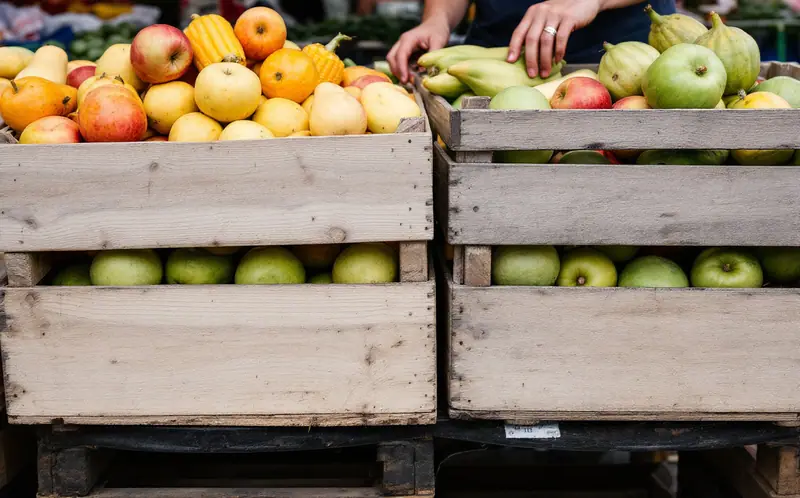
Local food has moved from farmers' markets and roadside stands into the language of supermarket flyers and restaurant menus. Shoppers tell pollsters they would buy more food grown near home, and many say they would pay a little extra for it. Yet in most Canadian grocery stores the share of fresh produce from nearby farms remains small for much of the year. The gap between what people say they want and what reaches the shelf is the most interesting part of the story, and it comes down mostly to logistics and business structure rather than lack of interest.
What "local" means
There is no single definition. Some shoppers mean the same county, some the same province, some simply "Canadian". Federal labelling guidance of the time treated a "local" claim as meaning food produced within 50 km of where it is sold, a strict standard that many retail promotions do not try to meet. Provincial programs take a wider view: Foodland Ontario, a provincial promotion program since 1977, identifies food grown in Ontario. Restaurants and markets often use their own rules. The lack of a shared meaning is itself part of the problem, because a claim that cannot be checked is hard to trust.
What drives the demand
People give a cluster of reasons for buying local food, and they overlap.
- Freshness and taste. Produce picked closer to ripeness and sold within a day or two can taste better than produce bred to survive long transport. This is the most commonly cited reason and the easiest to experience.
- Trust and knowing the source. Food safety scares involving distant supply chains make some shoppers want to know who grew their food. A face at a market stall offers a kind of assurance that a label cannot.
- Supporting farms and the local economy. Many buyers want their money to stay with nearby farms and small businesses, and to keep farmland in production close to towns and cities.
- Environmental perceptions. Fewer kilometres travelled sounds greener. The real picture is mixed: transport is often a modest share of a food's total environmental footprint, and a field tomato shipped from a warm climate can have a smaller footprint than one grown in a heated greenhouse nearby. Shoppers' perceptions still drive purchases.
- Seasonal and regional identity. Strawberries in June, sweet corn in August and apples in the fall are part of how many people mark the year.
What gets in the way
Seasonality
In most of Canada the outdoor growing season is short. Local supplies of many fresh vegetables and fruit arrive in a rush over a few months, then vanish. Storage crops such as apples, potatoes, carrots and onions stretch the season, and greenhouses produce tomatoes, cucumbers and peppers for much of the year, but a shopper who wants local lettuce in February will be disappointed.
Distribution and aggregation
This is the biggest obstacle. Large grocery chains buy through central distribution centres that receive full truckloads, consistently graded and packed, on a fixed schedule, often for many stores across a region. A single small farm cannot supply that volume, and delivering a few cases to each store individually is costly for the farm and disruptive for the store. Without someone to gather the output of many small farms into larger lots, the product has no practical route to the supermarket shelf.
Food safety rules and audits
Food safety requirements apply regardless of farm size. Meat is a clear example: meat from a provincially licensed plant can be sold within the province, but only meat from a federally registered plant can cross provincial borders. Retail buyers also increasingly ask fresh produce suppliers for on-farm food safety audits and traceability records, and the cost of meeting them falls hardest on small growers.
Retail procurement
Chains manage thousands of products and many suppliers. Each new supplier means a new account, new paperwork, product liability insurance, barcode and labelling requirements and delivery coordination. For a buyer, a large supplier offering many products all year is much easier to manage than many small ones offering a few products for a few weeks.
Price
Small farms rarely match the unit costs of large specialized operations, and they bear higher costs for packing and delivery per case. Some shoppers will pay more for local food, but many will not pay much more, especially for staples.
Food hubs and distribution co-operatives
The most promising answer to the aggregation problem is an intermediary owned by, or working for, a group of farms. A regional food hub collects product from several farms, grades and packs it to a common standard, stores it, sells it under a shared identity and delivers it to stores, restaurants and institutions. A distribution co-operative does much the same, with the farms owning the business and sharing its results.
These models can let small farms reach buyers they could not serve alone, while giving the buyer a single supplier with consistent quality and paperwork. They also face real challenges: they need enough volume to cover a warehouse, cooler and truck, managers with both farming and distribution skills, and members willing to commit their product rather than sell to whoever pays most that week.
A worked example: three farms and one truck
The numbers below are illustrative, not from any real farm or hub.
Imagine three vegetable farms, each producing about 40 cases a week of mixed vegetables in season. Separately, each could deliver to a handful of nearby stores, spending perhaps $8 per case on driving time, fuel and paperwork. Together, through a small hub, they can deliver 120 cases in one load to a regional distribution centre or a few larger customers.
| Cost per case | Farms alone | Through a hub |
|---|---|---|
| Delivery and handling | $8.00 | $3.00 |
| Hub grading, packing and sales fee | $0.00 | $2.50 |
| Total off-farm cost | $8.00 | $5.50 |
On these assumptions each farm saves $2.50 a case. Spread over a 20-week season of 40 cases a week, that is $2,000 per farm, and the hub reaches buyers none of the farms could serve alone. The margin is thin, and it depends on keeping the truck full. If one farm drops out, the hub's fixed costs fall on fewer cases.
Where it leaves the local food question
Demand for local food is real and broad, but demand alone does not move product. The barriers are mostly about volume, consistency, paperwork and the cost of moving small lots, which is why solutions tend to come from better coordination between farms and buyers rather than from marketing. The same lessons about long-term supplier relationships appear in what agri-food can learn from the keiretsu supplier model. Writing on how farms, processors and retailers coordinate is gathered on the value chain hub and under value chains and food waste.