
PaperValue chains and food waste
Cutting food waste as a business decision
Food a business throws away was paid for twice: once to buy it, again to bin it. How plants and stores treat waste as lost margin, with a worked bakery example.
 By Annelies DekkerFirst posted at this address on 6 min read
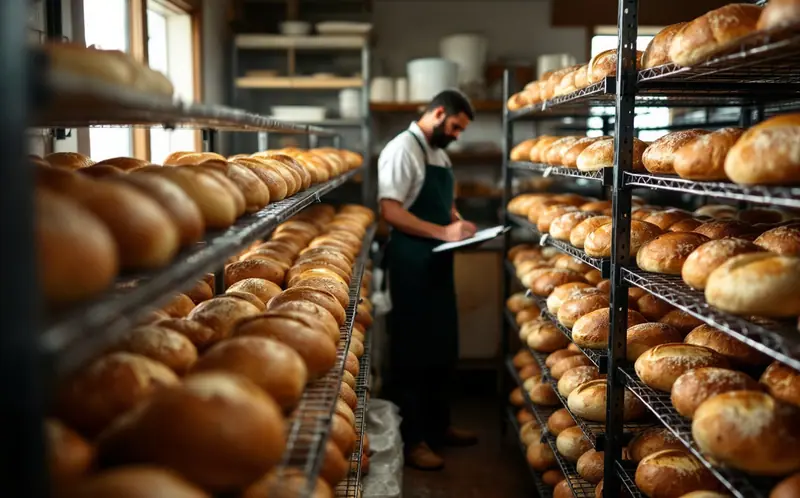
A food business rarely sees its waste as a line on the income statement. It shows up instead as a slightly lower gross margin, a disposal bill, a few extra hours of labour, and a vague sense that the numbers should be better. Treating waste as a business problem means making it visible, putting a dollar figure on it, and deciding which parts are worth fixing. Some waste is the price of good service. Much of it is not.
Waste is margin that never arrived
Every unit of food that is thrown away carries three costs. The first is what it cost to buy or make: ingredients, packaging, labour and energy. The second is the cost of getting rid of it, from hauling fees to staff time spent pulling product off shelves. The third is less obvious: the margin the business would have earned if that unit had sold.
For a store or a plant working on thin margins, the arithmetic is sobering. If a business earns 3 cents of profit on each dollar of sales, a dollar of product thrown away at cost wipes out the profit on more than 30 dollars of sales. Seen that way, a modest cut in waste can be worth as much as a large rise in sales, and it usually costs less to achieve.
Borrowing from lean manufacturing
Lean thinking grew out of car manufacturing, most famously the Toyota Production System, and spread to food plants and distribution centres. Its starting point is that anything which does not add value for the customer is waste. Lean practitioners list several forms: over-production, waiting, unnecessary transport, excess inventory, extra processing, needless movement and defects. In a food business, several of these end as spoiled product.
Over-production is the main one. A plant that runs a full shift on a product to keep the line busy, or a store that bakes every rack in the morning to be safe, converts ingredients into stock that may never sell. Excess inventory is the next: food that sits in a cooler longer than needed loses shelf life with every day. Defects, from underweight packs to wrong labels, turn good food into unsaleable food.
The lean response is to produce to demand rather than to capacity, to keep batches small, and to find the root cause of each defect rather than sort out bad product at the end.
Step by step: making waste visible
Most businesses that cut waste follow a similar sequence.
- Measure it. Weigh or count what is discarded, by product and by reason, for a few weeks. Spoiled, damaged, over-produced, past date and customer returns should be kept apart.
- Price it. Multiply each category by its cost, not its selling price, and add disposal costs. This produces a figure managers can compare with other spending.
- Rank it. Usually a handful of products and one or two causes account for most of the value lost. Start there.
- Find the cause. Ask why the product was wasted until the answer points to something that can be changed: an ordering rule, a recipe yield, a display practice, a supplier's shelf life.
- Change one thing and measure again. Without the second measurement, nobody knows whether the change worked.
Forecasting and ordering
Much retail and food service waste starts with ordering. Ordering by habit (the same quantity every Tuesday) ignores weather, holidays, local events and promotions. Even a simple forecast based on the same weekday over the past few weeks, adjusted for known events, tends to beat habit. Ordering more often in smaller quantities shortens the time food sits in the back room, though it can raise delivery costs, so the trade-off has to be priced.
Suppliers can help when they see the retailer's sales data. A processor that knows what is actually selling can plan production closer to demand and ship product with more shelf life left.
Shelf life and markdowns
Shelf life is a resource, and it can be managed. Rotating stock so the oldest product is sold first is basic practice, though it slips on busy days. Packaging choices can add days of life to fresh products, at a cost that is worth comparing with the waste avoided.
Markdowns are the last line. A store that reduces the price of short-dated food in the final day or two recovers part of its cost instead of none. The risk is training customers to wait for the discount, so most stores keep markdowns to set times and set levels. Food that still does not sell can go to food banks where it is safe to do so, which avoids disposal fees even if it earns nothing.
A worked example: a neighbourhood bakery
The numbers here are illustrative round figures for an imaginary business, not data from a real bakery.
Say a bakery bakes 200 loaves a day and sells them at $4.00 each. Ingredients, packaging and the labour and energy to bake a loaf cost $1.60. On an average day it sells 170 loaves, and 30 go unsold. Of those, 10 are sold the next morning as day-old bread at $2.00, and 20 are thrown away.
| Item | Before | After |
|---|---|---|
| Loaves baked per day | 200 | 180 |
| Loaves sold fresh at $4.00 | 170 | 168 |
| Sold day-old at $2.00 | 10 | 8 |
| Thrown away | 20 | 4 |
| Revenue per day | $700 | $688 |
| Cost of loaves baked | $320 | $288 |
| Gross margin per day | $380 | $400 |
The bakery starts to track sales by day of the week and finds it over-bakes most on Mondays and Tuesdays. It cuts the morning bake to 180, adds a small mid-afternoon bake on busy days, and accepts it will occasionally run out of one variety near closing. Fresh sales fall slightly, to 168, because a few late customers find the shelf empty.
Revenue drops by $12 a day, yet gross margin rises by $20, because the bakery stopped paying to make 20 loaves that were never sold. Over 300 trading days that is about $6,000 a year, before counting lower disposal costs and less staff time clearing shelves. The gain came from baking less, not selling more.
Where the savings show up
Savings from cutting waste are spread across the accounts, which is one reason they are overlooked:
- Cost of goods sold falls, because less is bought or made for the same sales.
- Disposal costs drop, from hauling and tipping fees to bin rentals.
- Labour is freed from sorting, pulling and discarding product.
- Working capital shrinks when less inventory sits on shelves and in coolers.
There is also a sales effect that runs the other way. A store with fewer tired-looking products on display can look fresher, while one that cuts stock too far loses sales to empty shelves. The aim is not zero waste, which would mean disappointed customers, but the level where the last dollar spent on preventing waste still saves more than a dollar.
For a walk through the whole chain, from field to household, see where food is wasted along Canada's value chain. How firms share the cost and gain of these changes with their suppliers is a recurring theme on the value chain hub, and older work on quality systems in quality management in food businesses covers the root-cause habits that lean thinking relies on.