
PaperValue chains and food waste
Sustainability certification schemes for fruit and vegetable growers
GlobalG.A.P., CanadaGAP, organic and retailer codes all ask growers for audits. What each scheme covers, what it costs a small farm, and how they overlap.
 By Annelies DekkerFirst posted at this address on 5 min read
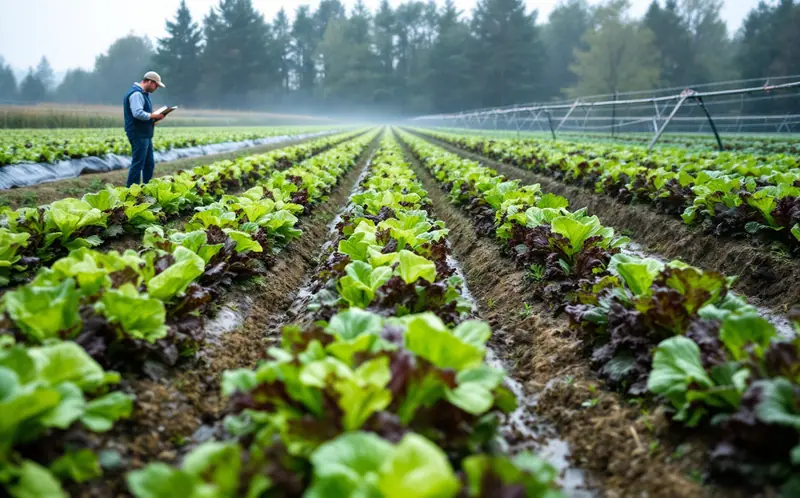
A fruit or vegetable grower who sells to supermarkets, packers or export buyers is likely to be asked for a certificate. Sometimes it is about food safety, sometimes about farming practices more broadly, sometimes about organic status, and often about more than one at a time. Each scheme has its own standard, its own auditors and its own fees. For a large operation with an office and a food safety manager, that is a cost of doing business. For a small family farm, it can be the difference between keeping a market and losing it.
This page sets out the main schemes a Canadian grower is likely to meet, compares what they ask for, and looks at what certification costs and why so many standards overlap.
Why certification spread
Retailers and food companies carry the risk if something goes wrong in their supply chain, and they cannot visit every farm. A certificate from an independent auditor is a way of transferring some of that assurance work to a third party. Food safety came first: outbreaks linked to fresh produce made retailers want evidence that growers were controlling risks from water, manure, workers' hygiene and equipment. Broader sustainability concerns, covering soil, water, pesticides, workers and wildlife, followed.
Because each large buyer had its own concerns, the number of standards multiplied. Growers selling to several buyers found themselves audited several times a year against standards that asked largely similar questions.
The main schemes
GlobalG.A.P.
GlobalG.A.P. began in 1997 as EurepGAP, a standard set up by European retailers and their suppliers for good agricultural practice, and took its present name in 2007 as it spread beyond Europe. Its fruit and vegetables standard covers food safety, traceability, worker health and safety, and environmental practices such as pesticide and fertilizer use. Certification requires an audit by an approved certification body. Small producers can certify as a group, with an internal control system and sample audits, which spreads the cost. For Canadian growers it matters most when selling into Europe or to buyers who require it.
CanadaGAP
CanadaGAP is a food safety program for fresh fruit and vegetables, developed by the Canadian Horticultural Council and launched in 2008. It focuses on on-farm food safety: water, manure and compost, worker hygiene, sanitation, pesticide use as it affects residues, and traceability. It does not try to cover wider environmental or social questions. By 2010 two of its certification options had been recognized under the Global Food Safety Initiative, which helped retailers accept it. In 2012 the program moved toward a standalone not-for-profit corporation, CanAgPlus. Growers can choose from several options, including individual and group certification.
Organic
Organic certification is about how the food is produced: no synthetic pesticides or fertilizers, no genetically engineered inputs, and rules on soil building, crop rotation and livestock care. In Canada, the Organic Products Regulations took effect in 2009, requiring certification by an accredited body for organic products sold across provincial or national borders or carrying the Canada Organic logo. An equivalence arrangement with the United States in the same year allows certified products to move between the two countries without separate certification. Organic is a marketing standard that earns a price premium, not a supply chain requirement imposed by buyers.
Retailer and buyer codes
Some large retailers and food manufacturers run their own grower codes or add their own modules on top of an existing standard. These often add questions on water use, biodiversity, energy or labour practices. They can be useful for the buyer, but they add yet another set of requirements and audits.
Other labels
Fair trade and similar ethical labels mainly cover tropical products such as coffee, cocoa and bananas, and rarely apply to Canadian fruit and vegetable growers.
Comparison at a glance
| Scheme | Main focus | Who usually asks for it | Audit | Group option |
|---|---|---|---|---|
| GlobalG.A.P. | Food safety plus environmental and worker practices | European and export buyers | Independent certification body | Yes |
| CanadaGAP | On-farm food safety | Canadian retailers and packers | Independent certification body | Yes |
| Organic | Production method | The farm, to earn a premium | Accredited certification body | Some certifiers offer it |
| Retailer codes | Varies by buyer | The individual buyer | Buyer's own or approved auditors | Varies |
Benchmarking: reducing the overlap
The obvious answer to overlapping standards is to agree that some are equivalent. The Global Food Safety Initiative, set up in 2000 by retailers and manufacturers, does this for food safety: it compares schemes against its own requirements, and many large buyers accept any scheme that passes. That lets a grower certified to one recognized scheme sell to buyers who would otherwise demand another. GlobalG.A.P. runs its own benchmarking process for national schemes that want to be treated as equivalent to it.
Benchmarking reduces duplication but does not remove it. Buyers can still add their own requirements, and sustainability standards beyond food safety have no single benchmarking system comparable to the one for food safety.
What certification costs a small grower
The figures below are illustrative round numbers for an imaginary 20-hectare vegetable farm, not quotes from any scheme or certification body.
| Cost item | One-time | Each year |
|---|---|---|
| Upgrades: handwashing station, water testing, storage changes | $4,000 | |
| Scheme registration and licence fees | $300 | |
| Audit fee and auditor travel | $1,200 | |
| Record-keeping and staff time (about 60 hours at $20) | $1,200 | |
| Training for owner and staff | $500 | $200 |
| Total | $4,500 | $2,900 |
On sales of, say, $300,000 a year, $2,900 is about 1 per cent. On sales of $60,000 it is nearly 5 per cent, which is why the burden falls hardest on small growers. A second scheme can add much of the cost again, especially the audit and staff time. Group certification, where a packer or co-operative holds the certificate and growers share an internal control system, is one of the few ways to cut the cost per farm substantially.
What a grower should weigh
Before adding a certification, a grower can ask a few practical questions: which buyers require it, and how much of the farm's sales do they represent; whether a scheme already held is benchmarked as equivalent; whether a group option exists through a packer or co-operative; and whether the scheme earns any price premium or simply keeps the door open. Most food safety certification is in the last category. It is the cost of access, not a source of extra revenue.
Ontario farms already work through a voluntary environmental self-assessment, discussed in environmental farm plans and what food buyers ask of farms. The thinking behind audits and continuous improvement is older than any of these schemes; see quality management in food businesses. Related reading on supply chains is under value chains and food waste.