
PaperPolicy notebook
Species at risk on farmland: incentives, costs and alternatives
When rare species live on private farmland, the rules meant to protect them can backfire. How habitat law shapes landowner incentives, and what works better.
 By Reid GauthierFirst posted at this address on 6 min read
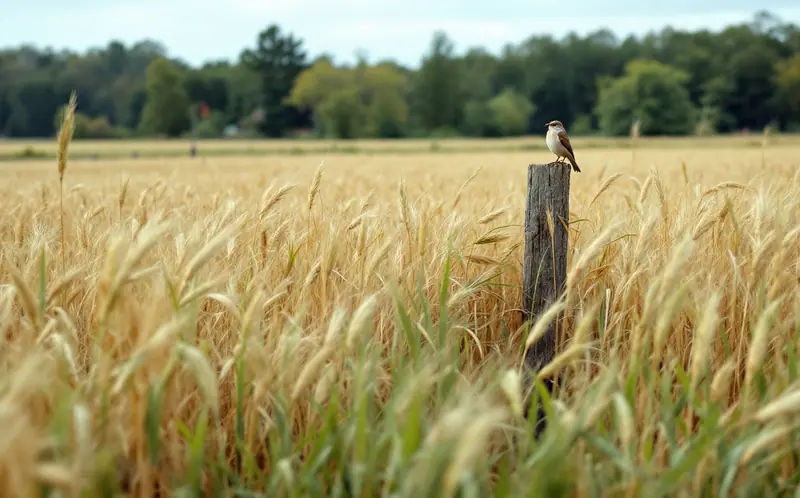
Much of the habitat that rare plants and animals need in southern Canada sits on private land, and a large share of that private land is farmed. Hedgerows, wet corners, woodlots, pastures and hayfields shelter species that have little room left anywhere else. That simple fact turns species protection into an economic question as well as an ecological one: who pays for habitat that the public values but a landowner owns?
This page explains how a habitat protection law works on farmland, using Ontario's Endangered Species Act, 2007 as the example, and why economists worry about the incentives such laws can create. It is a general explainer, not legal advice. A landowner with a specific question should go to the provincial ministry or a lawyer.
How Ontario's law is built
Ontario has had endangered species legislation since 1971. The Endangered Species Act, 2007 replaced the older statute and came into force in 2008. Its main parts work in sequence:
- An independent scientific committee assesses species and recommends a status: extirpated, endangered, threatened or special concern.
- Assessed species go on the Species at Risk in Ontario list.
- Once a species is listed as endangered or threatened, it becomes an offence to kill, harm or harass it, and its habitat is protected from damage or destruction.
- The province prepares recovery strategies and can write regulations that describe a species' habitat in detail.
- The minister can issue permits, or make agreements, that allow activities otherwise prohibited, under conditions set out in the Act.
Two features matter most for farmers. First, protection follows listing automatically, rather than waiting for a separate decision on each property. Second, habitat protection reaches private land. A field, a fencerow or a barn can be habitat if a listed species depends on it.
The federal Species at Risk Act sits alongside provincial law. It applies most directly on federal land, to aquatic species and to migratory birds, so on most Ontario farms the provincial statute is the one that bites.
The incentive problem
A habitat rule changes the value of land. If a farmer learns that a threatened species nests in a hayfield, the cutting date, the drainage plan or the decision to plough that field may now need a permit. The land is worth less to its owner, and nothing in the law pays the difference.
Economists have long pointed out what follows. If finding a rare species on your land costs you money, you have a reason not to find it, not to report it and, in the worst case, to make the land unsuitable before anyone notices. American writers on the US Endangered Species Act called this the "shoot, shovel and shut up" problem. The phrase is crude, and outright killing of protected animals is a crime that most landowners would never consider. Its real point is quieter: rules that punish the presence of a species can lead people to remove habitat early, through ordinary farming and forestry decisions that are perfectly legal before a listing.
Studies of timber owners in the southeastern United States found evidence of exactly this, with some owners harvesting earlier near colonies of a protected woodpecker to avoid future restrictions. Whether the same thing happens on Canadian farms is hard to measure, because the behaviour leaves no record. But the logic does not depend on geography.
A worked example
Take an illustrative 80-hectare beef and hay farm. The numbers are round and invented.
| Item | Before a listing | After a listing |
|---|---|---|
| Hay area | 30 ha | 30 ha |
| Area where cutting must wait until birds fledge | 0 ha | 12 ha |
| Hay quality on delayed fields | High | Lower, more stem, less protein |
| Illustrative lost feed value | $0 | about $150 per ha, or $1,800 a year |
| Option to plough for corn or soybeans | Open | Needs advice or a permit |
Grassland birds such as the bobolink, which nests in hayfields and whose numbers in Ontario fell for decades, are the kind of species that create this situation. The farmer in the example loses roughly $1,800 a year on these assumptions, plus some freedom to change crops. A neighbour whose hayfields hold no birds bears no cost at all. If the farmer had ploughed the hay into a row crop a year before the listing, the cost would never have arrived. That gap is the incentive problem in a single table.
Alternatives that change the incentive
The policy aim is to make a rare species a neutral or even welcome discovery. Several tools try to do that.
| Tool | How it works | Strength | Weakness |
|---|---|---|---|
| Stewardship payments | Government or a conservation group pays for practices such as delayed cutting or fencing a wetland | Pays the person who bears the cost | Depends on budgets that can end |
| Conservation easements | The owner sells or donates the right to develop or clear part of the land, usually forever | Long-lasting, owner keeps title | Lowers resale value, slow to arrange |
| Safe harbour agreements | The owner improves habitat and in return is assured that extra animals attracted will not bring new restrictions | Removes the fear of success | Needs trust and paperwork |
| Tax relief | Donations of land or easements earn tax benefits, as under Canada's Ecological Gifts Program | Uses existing tax system | Helps owners with taxable income most |
| Regulation alone | Prohibitions and permits | Clear legal floor | Can create the incentive problem above |
Safe harbour agreements began in the United States in the mid-1990s and were designed with the perverse incentive in mind: they promise landowners that doing good for a species will not make their legal position worse. Stewardship funds work on the same principle from the other direction, by paying for the cost that would otherwise fall on one family.
What this means for farm policy
Species protection on farmland is a classic case where the benefits are spread across the public and the costs land on a few owners. Policies that ignore that split tend to get less habitat than they hoped for, because they turn landowners into reluctant partners. Policies that share the cost, through payments, easements or assurances, ask taxpayers to carry more of the bill but usually get better cooperation in return.
Readers interested in how other public goals land on individual farms will find related pieces under the policy notebook and the agri-food policy hub. Questions about the cost side, such as how a lost hay crop or a delayed field fits a whole-farm budget, belong with farm business.
The practical lesson for anyone designing a program is to look at the first year a species is found on a farm. If the owner is better off having reported it, the program is likely to work. If the owner is worse off, the program has to rely on goodwill, and goodwill is a thin foundation for protecting a species that may need decades to recover.