
PaperDairy and supply management
New farmers and alternative markets inside supply management
Why quota cost keeps newcomers out of dairy, eggs and poultry, how small-flock limits and new entrant programs work, and where niche markets fit in Canada.
 By Annelies DekkerFirst posted at this address on 5 min read
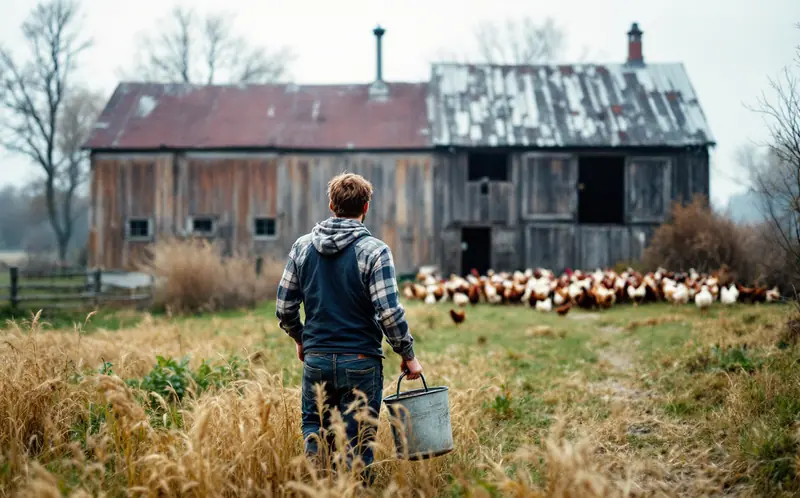
Supply management was built to protect the farmers who were already farming. That is one of its strengths for them, and one of its sharpest problems for anyone trying to start. A young person who wants to milk cows, raise chickens for meat or keep laying hens commercially in Canada must first buy the right to sell, and that right often costs more than the barn, the land or the animals. This page walks through the hurdles a newcomer meets, step by step, and then looks at the side doors: small-flock exemptions, new entrant programs and niche markets.
Step 1: the price of the ticket
In dairy, eggs, chicken, turkey and hatching eggs, a farm needs quota to sell into the regulated market. Quota is bought from existing farmers, usually through a provincial exchange. Because supply management keeps prices above what an open market would pay, quota captures that extra margin, and its price rises to reflect years of expected future earnings.
In Ontario dairy, the provincial board capped the exchange price at $25,000 per kilogram of daily butterfat, a ceiling reached on January 1, 2010. Established farmers who already hold quota can borrow against it to buy more. A newcomer has no quota to borrow against, and lenders want security for every dollar.
Step 2: adding up the start
Here is an illustrative start for a 40-cow dairy. All numbers are round and for illustration only.
| Item | Illustrative cost |
|---|---|
| Quota: 40 kg of daily butterfat at $25,000 | $1,000,000 |
| 40 milking cows at $2,000 each | $80,000 |
| Barn, milking equipment and manure storage (used or rented) | $400,000 |
| Feed, working capital and machinery | $200,000 |
| Total, before land | $1,680,000 |
Quota is the largest single item. It is also an asset that earns nothing until milk is shipped, and whose value depends on policy decisions the farmer cannot control. For a newcomer without family land or a parent's quota, the gap between savings and the bank's requirements is usually too wide to close.
Step 3: look for a new entrant program
Several provincial boards have created programs to help. They usually set aside a small amount of quota each year and lend it to a few selected applicants, who must buy some quota of their own first.
Dairy Farmers of Ontario launched such a program on August 1, 2009. It can help up to 10 new entrants a year. A selected entrant who already owns at least 12 kilograms of quota can use up to 12 more kilograms from the board for five years, then returns one kilogram a year from the sixth year onward. Quebec has run its own start-up assistance for dairy and sets aside quota for newcomers each year, and boards in other provinces and sectors offer similar schemes.
In the illustrative 40-cow example, borrowing 12 kilograms from the board would cut the up-front quota bill by $300,000, but the newcomer would still need to buy the rest, and the borrowed quota has to be given back over time. These programs open the door a little. They do not remove the cost of entry.
Step 4: start small, outside quota
Provincial boards generally let farms keep a small number of birds without quota. The limits are set by each provincial board and differ by province and by species. In Ontario, the chicken board allows a farm to raise up to 300 meat chickens a year without quota. Egg and turkey boards set their own, separate limits.
These exemptions let a farmer test a market, sell to neighbours and farmers' market customers, and learn the work. They are not designed to support a full-time income. A newcomer who outgrows the limit faces the same quota price as anyone else, with no intermediate tier.
Step 5: find a market the quota system does not cover well
Some newcomers build a business on products that sit outside supply management or in a corner of it.
- Goat and sheep milk are not supply-managed, so there is no quota to buy. Demand has grown for goat milk and goat cheese, though prices can swing and processing capacity is limited.
- Organic cow's milk still needs quota, but in provinces with organic programs the board collects organic milk separately and pays a premium for it. Some new farmers convert an existing operation rather than starting from nothing.
- Heritage and pasture-raised poultry can sell at high prices direct to customers, but within the small-flock limits or through board programs for specialty production where they exist.
- Local food channels, from farm gates to restaurants, reward a story as well as a product. The demand side is explained in local food: what drives demand and what gets in the way.
The trade-offs for policy
Every way of easing entry costs someone something.
Raising small-flock limits helps newcomers and local food buyers, but quota holders argue that unregulated birds take a slice of a market they paid to serve, and food safety oversight is harder across many small producers. Lending quota to newcomers means less quota is available for existing farms that want to grow. Capping quota prices slows the rise in entry costs but creates queues of buyers who cannot get quota at the capped price. Creating special classes for niche products adds administrative complexity, and every class is negotiated among boards, processors and governments.
There is also a question of fairness between generations. Farmers who received quota free when the system began, or bought it cheaply decades ago, hold an asset that newcomers must pay for in full. Programs for new entrants are partly an answer to that imbalance. For more on how quota shapes farm finances, see the farm business issue page and the dairy and supply management issue page.
For a would-be farmer, the most useful early step is often the least glamorous: spending a season or two working on an established supply-managed farm. It shows whether the daily work suits you, and it is how many newcomers end up in the farm succession arrangements that, in practice, move more quota to new hands than any program.