
PaperDairy and supply management
The milk supply management debate in Canada, explained
Production quota, import tariffs and cost-based pricing: how Canada's milk system works, what each side argues, and a worked example of why quota costs so much.
 By Colette RanvilleFirst posted at this address on 5 min read
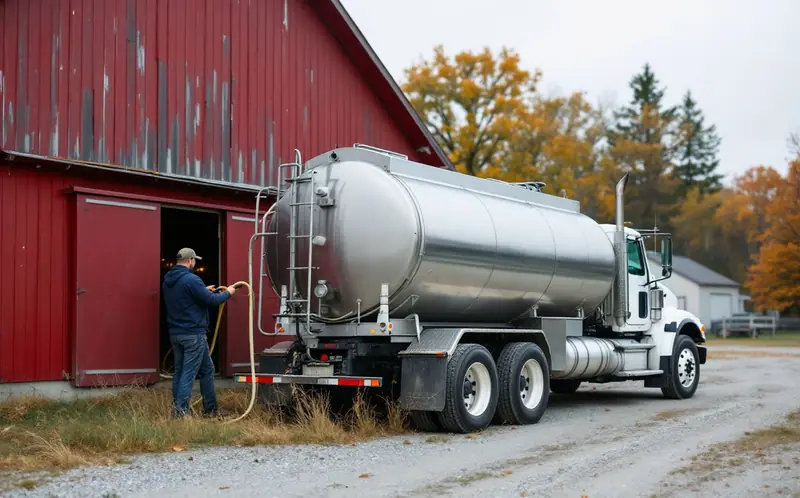
The argument over how Canada manages its milk supply has run for decades, and both sides often talk past each other. One side describes a system that keeps family farms in business without subsidy cheques. The other describes a cartel that charges shoppers too much and ties the hands of trade negotiators. Both descriptions contain some truth, which is why the debate never seems to end. This explainer sets out how the system works, what each side argues, and where the money goes.
Three pillars that hold each other up
Supply management for milk was built in stages. The Canadian Dairy Commission was created in the late 1960s, and a national plan for sharing the market for industrial milk among the provinces followed in the early 1970s. Provincial milk boards control fluid milk inside their own borders. The system has three parts, and each one depends on the other two.
Production control
Every farm that ships milk must hold quota, measured in kilograms of butterfat per day. The national target for industrial milk is set to match expected Canadian demand, then shared out among provinces, and each provincial board divides its share among its farmers. If a farm ships more than its quota allows, it is paid little or nothing for the extra milk.
Import control
Production limits only work if imports cannot fill the gap. Before the Uruguay Round trade agreement took effect in 1995, Canada used import quotas. After it, those were turned into tariff-rate quotas: a set volume of dairy products enters at low duty, and anything beyond it faces tariffs high enough to stop most trade, such as 298.5 per cent on butter and 245.5 per cent on cheese.
Cost-based pricing
With supply limited and imports held back, prices can be set rather than discovered. The Canadian Dairy Commission sets support prices for butter and skim milk powder each year after studying what it costs farms to produce milk, and provincial boards set the prices processors pay for milk in each use class. Milk for drinking, for cheese and for ingredients each carries its own price.
Take away any one pillar and the others fail. Without quota, high prices would call forth more milk than the market could absorb. Without tariffs, imports would undercut the set prices. Without administered pricing, there would be little reason to restrict output at all.
What supporters argue
- Farm incomes are stable and predictable, which lets farmers plan investment and succession.
- The system costs taxpayers very little, because farmers are paid by the market rather than through government payments of the kind common in the United States and Europe.
- Milk production stays spread across provinces, supporting rural communities and processing plants in regions that might otherwise lose them.
- Farmers have bargaining power against a small number of large processors and retailers.
- Retail milk prices in Canada are not always higher than in countries without supply management, because retail margins and taxes differ.
What critics argue
- Shoppers pay more for dairy products than they would with open borders, and lower-income households spend a larger share of their budgets on food.
- Quota has become an expensive asset, so new farmers face a high entry cost and older farmers capture a large windfall on retirement.
- Processors cannot grow through exports, because they pay domestic milk prices well above world levels, and trade rules limit subsidised exports.
- Canada's defence of high dairy tariffs can make it harder to win access for beef, pork, grains and oilseeds in trade talks.
- Guaranteed prices weaken the pressure to cut costs, so some farms stay smaller than they otherwise would.
Who gains and who pays
| Group | What they gain | What they give up |
|---|---|---|
| Farmers who received quota early | Stable prices and a valuable asset | Little |
| Farmers who bought quota recently | Stable prices | Large debt for quota |
| Would-be new farmers | Access to a stable market, once inside | A high cost of entry |
| Processors | Reliable milk supply | Higher milk costs and limited export growth |
| Shoppers | Steady supply of domestic dairy | Higher prices for some products |
| Export-oriented farm sectors | Little directly | Possible trade concessions elsewhere |
A worked example: why quota is so valuable
A kilogram of daily butterfat quota lets a farm ship 365 kilograms of butterfat a year. At a typical butterfat test, that is roughly 9,000 to 10,000 litres of milk. These figures are illustrative.
Now suppose, for the sake of the example, that the managed system pays farmers 15 cents a litre more than an open market would. On 9,700 litres, that premium is about $1,455 a year for each kilogram of quota.
A buyer looking at that stream of extra income will pay up to the point where the return just matches what the money could earn elsewhere. If a buyer accepts a return of about 6 per cent, the premium is worth roughly $24,000 per kilogram. That is close to the $25,000 ceiling Dairy Farmers of Ontario put on its quota exchange from January 1, 2010.
The point of the example is not the exact numbers. It is that the price of quota is the expected value of the system's future benefits, paid up front. Once a farmer has paid it, the higher milk price no longer feels like extra profit. It feels like the return needed to cover the quota debt. That is why any proposal to lower prices meets resistance from younger farmers in particular, and why new farmers and alternative markets are such a live question inside the system.
Common questions
Does supply management mean the government pays dairy farmers?
Not directly. Farmers are paid by processors at prices set through the boards. The cost falls mainly on buyers of dairy products rather than on public budgets.
Why can't Canada just export its surplus milk?
Trade rules limit subsidised exports, and milk priced for the Canadian market costs more than milk on world markets. Exports above the permitted subsidised volumes would have to sell at world prices, which most Canadian farms could not match while also paying for quota.
Is the debate only about dairy?
No. Eggs, chicken, turkey and broiler hatching eggs are also supply-managed, under similar rules, though dairy is the largest of these sectors and draws the most attention. The dairy and supply management issue page and the agri-food policy hub cover the wider set.
What would change if tariffs fell?
Imports would set a ceiling on domestic prices. Quota values would fall, because the premium they capture would shrink, and the burden would fall hardest on farmers carrying quota debt. How that loss is handled is what any serious reform proposal has to answer first.