
PaperTrade and markets
Ethanol policy and the livestock feed bill
Fuel mandates turn corn and wheat into ethanol, so livestock feeders bid against the plants for grain. How the cost passes through, and what DDGS returns.
 By Reid GauthierFirst posted at this address on 6 min read
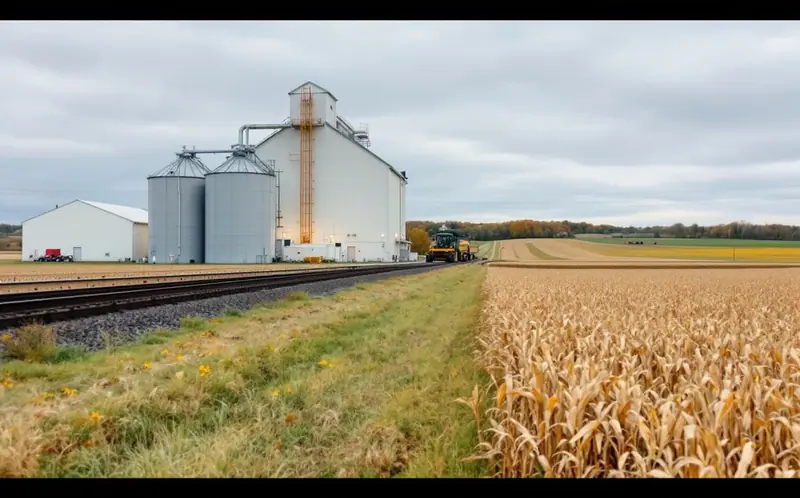
A litre of gasoline and a pork chop do not seem to have much in common. Yet in Canada and the United States they are linked by a policy choice: governments require fuel sellers to blend a share of renewable fuel into what they sell, most of that fuel is ethanol, and most ethanol in North America is made from grain that livestock would otherwise eat. Anyone who feeds hogs, cattle or poultry is therefore bidding against the fuel tank for part of their ration.
This page walks through how the mandates work, how they reach the feed bill, how much distillers' grains give back and what the policy trade-offs look like.
The mandates
Canada's federal Renewable Fuels Regulations were finalised in 2010. From December 15, 2010, producers and importers of gasoline had to average at least 5 per cent renewable fuel content across the gasoline they sold. A separate 2 per cent requirement for diesel fuel and heating oil followed in 2011.
Provinces moved first. Ontario's ethanol in gasoline regulation required fuel suppliers to average at least 5 per cent ethanol from January 1, 2007. Saskatchewan and Manitoba set their own mandates, in some cases above the federal level, partly to support grain-based plants on the Prairies. Ottawa also paid operating incentives to domestic biofuel producers, which helped new plants get through their first years.
South of the border, the US Renewable Fuel Standard, enlarged by legislation in 2007, called for far larger volumes. By the 2010 crop year roughly 4 in 10 bushels of the US corn crop went to ethanol plants, before allowing for the feed that came back from them. Because Canadian corn prices track US prices closely, the American mandate matters at least as much to a feeder in Ontario or Quebec as the Canadian one.
How the money moves
The chain from fuel policy to feed bill runs in five steps.
- The mandate creates demand: fuel blenders must buy ethanol whether or not it is cheap compared with gasoline. That gives ethanol plants a floor under their sales.
- Plants buy grain: in Eastern Canada the main feedstock is corn. On the Prairies, wheat and some corn are used. A plant running steadily buys grain every week of the year.
- Grain prices rise at the margin: extra demand for a crop with a fixed harvest pulls the price up until some other buyer, usually a feeder or an exporter, buys less.
- Feeders pay more for energy: corn and feed wheat are the main energy sources in hog, poultry and feedlot rations, so higher grain prices land on the largest single cost of raising livestock.
- Part of the grain comes back: the ethanol process uses the starch and leaves most of the protein, fat and fibre behind as distillers' grains, which go back into the feed market.
How much of a grain price rise is caused by ethanol, rather than by weather, export demand, energy prices or the exchange rate, is hard to measure and fiercely argued. Estimates vary widely depending on the method and the years studied. What is not in doubt is the direction: more grain used for fuel means less available for feed at any given price.
What distillers' grains give back
Dried distillers' grains with solubles, usually called DDGS, are the main co-product. As a rough rule, a tonne of corn yields about 400 litres of ethanol and around 300 kilograms of DDGS. Because the starch is gone, DDGS are richer in protein, fat and phosphorus than the grain they came from.
That makes them a partial offset. Feedlot cattle can use fairly high levels of distillers' grains, and they suit ruminants well. Hogs and poultry can use them too, but at lower inclusion rates, since too much can soften pork fat and the fibre is less useful to animals with a single stomach. Wheat-based distillers' grains from Prairie plants differ in nutrient content from corn-based ones, and buyers test loads before setting rations.
So the offset is real but uneven. Beef feeders recover more of the lost grain through distillers' grains than hog and poultry feeders do.
A worked example for a hog finisher
The numbers below are round and illustrative. They are not taken from any real farm.
Say a finishing barn raises pigs from 25 to 120 kilograms. Each pig eats about 260 kilograms of feed over that period, and corn makes up about 70 per cent of the ration, so roughly 180 kilograms of corn per pig.
| Item | Lower grain price | Higher grain price |
|---|---|---|
| Corn price per tonne | $180 | $240 |
| Corn cost per pig (180 kg) | $32.40 | $43.20 |
| Extra cost per pig | $10.80 | |
| Saving from replacing some corn and soybean meal with DDGS | about $2.50 | |
| Net extra feed cost per pig | about $8.30 | |
| For a barn marketing 5,000 pigs a year | about $41,500 |
If a share of that $60 per tonne rise is due to fuel demand, then only that share is fairly charged to ethanol policy. The arithmetic shows why the size of that share matters so much to livestock producers, and why their associations ask for it to be measured honestly.
A cattle feeder doing the same sum would find a larger grain bill per animal, since a finishing steer eats far more grain than a pig, but also a larger DDGS offset, because the ration can carry more distillers' grains.
The policy trade-offs
Supporters of the mandates point to new markets for grain farmers, rural jobs at plants, steadier demand for corn and wheat, and a domestic fuel source. Livestock producers, meat processors and some economists point to higher and more volatile feed costs, a transfer of income from feeders to grain growers and fuel blenders, and doubts about how much the policy cuts greenhouse gas emissions once land use and fertiliser are counted.
There is no neutral answer, because the policy moves money between groups that farm side by side. A grain farmer and a hog farmer on neighbouring concessions can see the same mandate very differently. Readers can follow the related questions under trade and markets, and the effect of feed costs on where hogs are raised in what decides where Canada raises and processes hogs.
For livestock sectors, the practical issue is less whether ethanol mandates exist than how they behave in a bad crop year. A mandate that holds firm when the harvest is short forces all of the shortfall onto feed and export buyers. Some analysts have suggested flexible mandates that ease when grain prices spike, which would share the pain of a drought between fuel and feed. Whether such a design is workable, and who would trigger it, is the policy question worth watching in any review of the rules. More policy notes are collected in the policy notebook.