Why exterior paint matters more on a farm than it looks
Putting off exterior paint on a farmhouse or barn saves money this year and often turns a paint bill into a carpentry bill later.
 By Colette Ranville6 min read
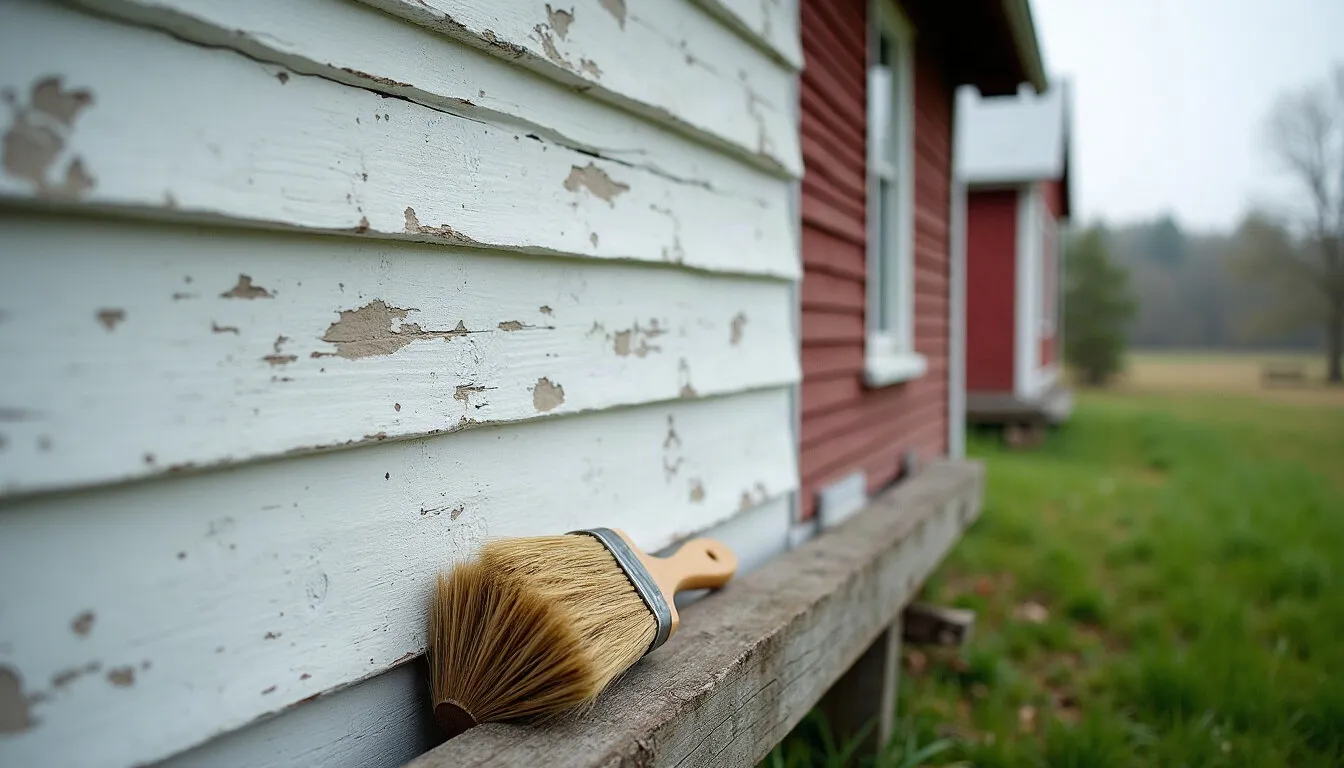
Every few summers on the farm where I grew up near Saint-Hyacinthe, the milk house got a fresh coat on its south wall, the one that took the afternoon sun and always peeled first. My father treated it as a chore squeezed between milkings, but it was really a small investment decision. Farm families in the high, dry country around Colorado Springs face the same choice with stronger sun. What should they ask when they start looking at Colorado Springs exterior painting for an older farmhouse or outbuilding?
This piece looks at exterior paint as an economic decision: what it protects, what it costs when it is put off, and who ends up carrying that cost. It does not compare products or name a price, and it is not a recommendation of any contractor.
What exterior paint does on a farm
On a farmhouse, paint is the first layer between the weather and the wood. On a barn, a milk house or a farm store, it does the same job for siding, trim, doors and window frames. A sound paint film keeps water out of the wood, slows the damage from sunlight and makes small problems visible before they become large ones. When it fails, the wood underneath starts to take in moisture, swell, crack and eventually rot.
That makes exterior painting less a matter of looks than of maintenance. It sits in the same part of the farm budget as roofing, eavestroughs and caulking: the spending that keeps a building's value from draining away. The colour matters to the family, and a tidy farmstead matters to anyone selling from the yard, but the economic case rests on the wood.
Older farm buildings add their own wrinkles. Many farmhouses and barns carry decades of layered paint, and some of the older layers may contain lead. Disturbing that paint by scraping or sanding is a health question as well as a building one, and it is work for trained professionals who know how to test for it and contain it, not a weekend job for the family.
What it costs, and where the costs hide
The visible cost of painting is the contractor's invoice or, for smaller jobs, the materials and the family's own hours. The hidden costs sit on either side of that invoice.
- Preparation. Most of the work in a lasting paint job is in the preparation: cleaning, scraping loose paint, repairing damaged boards, priming bare wood. Skipping it makes the job cheaper this year and shorter-lived.
- Rot repair. The longer a failed surface is left, the more boards and trim need replacing before paint can go on. Carpentry costs more than paint.
- Labour on the farm calendar. The best painting weather often lines up with haying and harvest, and the hours spent on a ladder come out of somebody's week. On a dairy, that somebody has already been up for the 5 a.m. milking.
- Interior damage. Water that gets past failed siding or window trim can reach insulation and interior walls, and that bill arrives later and separately.
Back-of-the-envelope. Say an illustrative farmhouse needs repainting, and doing it on schedule costs $10,000 with little repair work. Say the family waits 4 more years, and by then $3,000 of siding and trim has rotted and must be replaced before painting. Waiting has turned a $10,000 job into a $13,000 one, and the family has only gained 4 years of not spending. Spread over those years, the delay costs about $750 a year. These are round illustrative numbers, not data from any real farm; the useful question is whether that yearly cost of waiting is worth what the money does elsewhere in the meantime.
Who carries the risk
On an owner-operated farm, the family carries the risk of deferred painting directly, and often in an uneven way. The people who decide to put it off are not always the people who pay for the rot. A couple in their sixties who plan to hand the farm to a daughter or son may see little reason to repaint a house they will leave, while the next generation inherits the backlog.
On a rented farmhouse, the lease usually decides who looks after the exterior, and the honest answer in many leases is that nobody quite does. A tenant has little reason to invest in someone else's siding; a landlord far away may not see it peeling. A clear line in the agreement about exterior upkeep saves arguments later.
For a farm store or a roadside stand, there is also the customer's eye. Shoppers judge freshness partly by how the place looks, fairly or not. A building that looks neglected is a small, steady drag on sales, which is hard to measure and easy to underestimate.
What to weigh before deciding
The useful questions are about the building first and the contractor second.
- How much of the surface is failing, and where. Sun-facing and weather-facing walls usually go first, and it may make sense to treat them on a shorter cycle than the rest.
- What is underneath. Bare or soft wood needs repair before paint; asking for both in one plan avoids surprises.
- How old the paint is. On older buildings, ask whether testing for lead is needed before any scraping or sanding starts.
- What preparation is included. A good painting contractor will generally explain how the surface will be prepared and why, since that is where the lasting value sits.
- When the work fits the farm year. Scheduling around milking, haying or harvest affects how much disruption the family absorbs.
- What the climate asks of the paint. In a dry place with strong sun, hail and big swings between day and night, a contractor can explain which preparations and coatings hold up, and how often to expect to repaint.
Comparing quotes is easier when they describe the same job. Two estimates can differ mostly because one includes board replacement, priming and caulking and the other does not, and the cheaper one may simply be a shorter-lived job. Asking each contractor to list what preparation and repair is included puts the numbers on a common footing.
It also helps to think about who will be around during the work. A painting crew on a working farm shares the yard with animals, equipment and family members coming and going at all hours. Agreeing in advance where ladders and materials can sit, which doors must stay clear for chores, and when the yard is busiest saves friction for everyone, and it is the kind of detail that a hired hand or a neighbour who helps at harvest will thank you for.
How the same arithmetic looks in a different place
In the St. Lawrence lowlands, the enemy of exterior paint is mostly moisture: wet springs, humid summers and freeze and thaw at both ends of winter. Paint fails by blistering and peeling where water gets behind it. In a high, dry place like the country around Colorado Springs, the sun does more of the damage. Paint chalks and fades faster on exposed walls, wood dries out and checks, and hail can mark siding in a single afternoon.
The economics, though, travel well. In both places the cheapest paint job over a building's life is the one done before the wood underneath needs repair. The difference is mostly in which walls go first and how often they need attention. A small acreage with one house and a shed faces a single bill every several years; a larger farmstead with a barn, a shop and a house tends to do better rotating the work, one building or one side each year, so that the cost and the disruption stay predictable.
The trade-off in one line
Exterior paint is cheap compared with the wood it protects, and the bill for waiting is paid in carpentry rather than paint. The practical step is to walk around the buildings each spring, note which walls are failing first, and plan the work before those boards need replacing.

Colette Ranville
Colette grew up on a dairy farm near Saint-Hyacinthe, Quebec, and now lives in Ottawa. She writes about dairy, supply management and the people who work on Canadian farms.