What water damage really costs a farm or rural food business
Drying out water damage yourself looks cheaper than calling a crew, until you price the hidden moisture left behind walls and floors.
 By Reid Gauthier7 min read
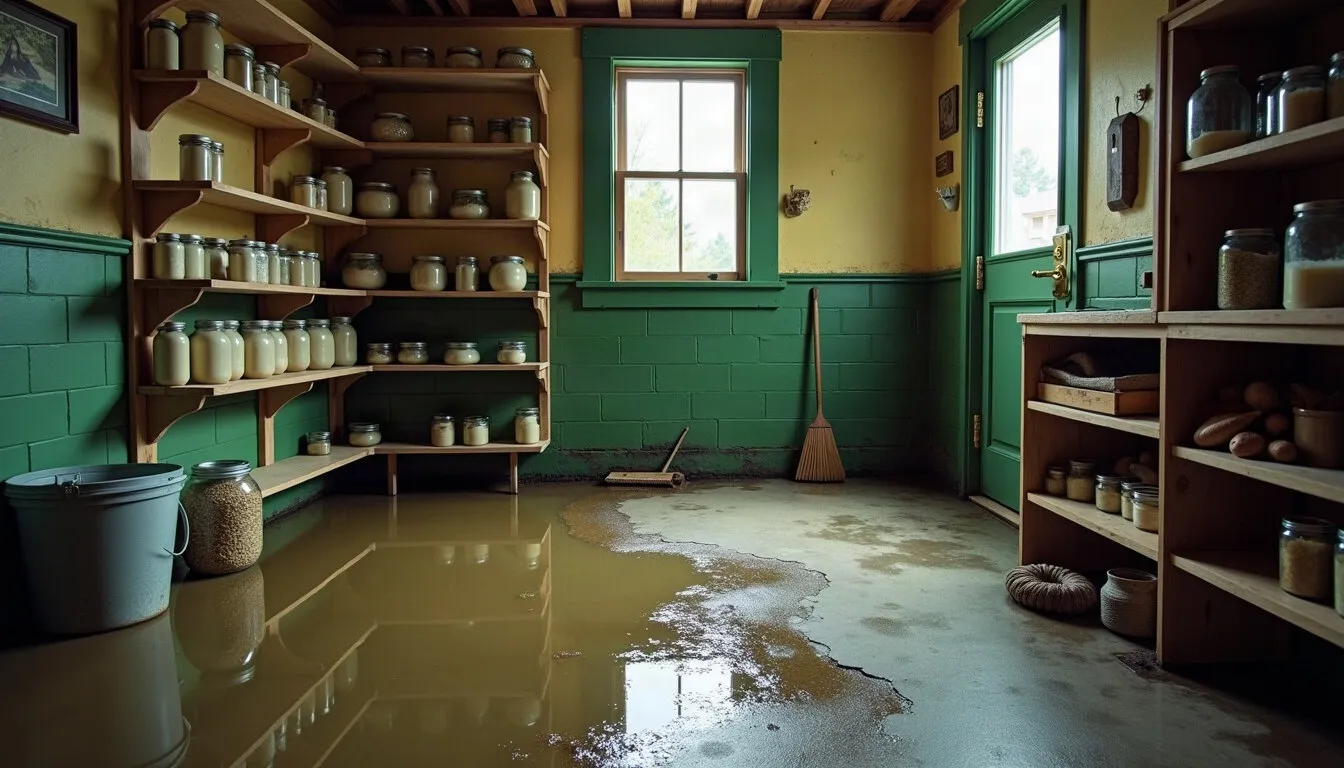
The first warm week of April on the Prairies rarely arrives politely. Snowmelt pools in every low corner of the yard, a basement floor drain that was quiet all winter starts to gurgle, and by Sunday the feed room has a dark tide line along one wall. The same scene plays out after a hard spring storm on a hobby farm or at a small food business in north Texas. For readers near Plano who are dealing with water damage or mould, one restoration company describes its services online: Visit website.
This piece looks at where the money goes when water gets into a farmhouse, a feed room or a small processing space, and who ends up holding the cost. It sets out the trade-offs between drying things out yourself and calling in a crew. It is not a quote, an insurance guide or a recommendation of any company.
Where water damage sits in a rural operation
On a farm, water is supposed to go where it is told: into troughs, through tile drains, down the ditch at the end of the lane. Water damage is what happens when it goes somewhere else. It can come from outside, as snowmelt, a flash storm or a creek that leaves its banks, or from inside, as a burst line in a cold snap, a failed water heater or a washer hose that lets go while everyone is out at the bins.
The buildings at risk are not only the house. A farm store with a concrete floor, a seed shed, a shop where the bearings and filters are kept, a room where eggs or honey are packed: each one holds stock, tools or records that do not like being wet. In a food business the stakes are higher again, because wet walls and floors are a food safety problem as well as a repair bill.
What makes water damage awkward economically is that it runs on two clocks. The first is the obvious one: standing water, soaked insulation, swollen flooring. The second runs quietly behind walls and under floors, where moisture that is not removed can turn into mould over the following days and weeks. The first clock is visible. The second is the one that tends to cost more.
What it costs, and where the costs hide
The direct costs are easy to list: pumping, drying equipment, removing and replacing drywall, flooring and insulation, and cleaning whatever the water touched. Those are the costs people get quotes for. The hidden costs are spread out and harder to see on any single invoice.
- Labour at the wrong time of year. Spring floods arrive in seeding season and summer storms arrive in haying or harvest. Every hour spent running fans in the basement is an hour not spent in the field.
- Lost stock. Bagged feed, seed, packaging, cardboard boxes and stored produce all absorb moisture. Feed that has gone mouldy is not a bargain at any price, and feeding it carries its own risk to the animals.
- Downtime in a food business. A small processing room or farm store that has had water through it may need to stay closed until it is cleaned and dry. Lost sales days do not come back.
- The second clock. Moisture left in wall cavities, subfloors or insulation can lead to mould that is found months later, often when someone renovates or sells.
Back-of-the-envelope. Say an illustrative farm family spends 60 hours drying out a flooded basement themselves during seeding. At a round $30 an hour for that labour, that is $1,800 of work pulled from the field. Say a hired crew would have cost $3,000 and finished in a few days, so doing it themselves saves $1,200 on paper. Now say there is a 1 in 4 chance that hidden moisture turns into a mould problem that costs $8,000 to put right. The expected cost of that risk is $2,000, which is more than the saving. These are round illustrative numbers, not data from any real farm.
The point of the box is not that hiring is always cheaper. It is that the cost of doing it yourself includes a risk that does not show up until later, and an honest estimate has to put some value on that risk.
Who carries the risk
Water damage has a way of landing on whoever happens to own the problem when it is found, not whoever caused it.
On an owner-operated farm, the family carries almost all of it: the repair, the lost time, and any mould that turns up when they come to sell or hand the place on. On a rented farmhouse or a leased shop, the split depends on the lease and on who knew what and when. A tenant who mops up and says nothing may save a phone call but can end up in a dispute later. A landlord who is not told cannot protect the building.
Insurance sits in the middle, and the details matter. Policies often treat sudden events, such as a burst pipe, differently from gradual ones, such as a slow leak or groundwater seeping in over weeks. That is a question for the policy wording and the broker, not for a general article, but the practical lesson is the same everywhere: take photos early, keep notes, and call before throwing things away.
For a food business, there is a third party in the picture: the customer. Product stored in a room that has had water through it may have to be discarded, and the decision about what is safe to sell should follow the local health authority's guidance, not a hopeful sniff test.
What to weigh before deciding
Not every wet floor needs a restoration crew. A small spill of clean water caught early on a concrete floor is a mop and fan job. The calculation changes as the water gets dirtier, the area gets larger or the time it sat gets longer.
Some points worth weighing:
- Where the water came from. Clean water from a supply line is a different problem from floodwater or a sewage backup, which can carry contamination. Contaminated water is a job for professionals with the right equipment and protection.
- How long it sat. The longer materials stay wet, the more likely the second clock is running.
- What it soaked into. Bare concrete dries; drywall, insulation, carpet and particleboard hold water and often have to come out.
- What else is in the room. Feed, food, packaging and farm records change the stakes.
- Who lives in the house. Mould can bother people with asthma or allergies, and that is a conversation for a doctor as much as a contractor.
- What the insurer needs. Some policies expect prompt reporting and documentation before work starts.
| Approach | Up-front cost | Risk of hidden moisture | Who it suits |
|---|---|---|---|
| Dry it yourselves | Low | Moderate to high | Small, clean-water spills caught early on hard floors |
| Hire a crew to dry and assess | Moderate | Low | Larger areas, soaked walls or floors, any sign of mould |
| Wait and see | Lowest now | High | Rarely anyone, though it is a common choice |
A good restoration company will generally measure moisture in walls and floors rather than guess, explain what has to be removed and why, and document the work in a way an insurer can follow. Those are fair questions to put to any firm before work starts.
Small yard, big yard
The arithmetic shifts with scale. On a small acreage with one house and a shop, a single flood can be the biggest unplanned cost of the year, and the family's own labour looks like the cheapest resource they have, until it is not. On a large mixed operation with hired staff, the labour has a clearer price, and the bigger risk is losing stored inputs or having a processing room offline during a busy season.
Climate changes the pattern too. On the Prairies the usual culprits are snowmelt and frozen lines. In a humid place with hot summers and heavy storms, such as north Texas, drying is harder and the second clock runs faster, because warm damp air keeps materials wet for longer. The logic is the same in both places: the sooner water is out of the building and the materials are confirmed dry, the smaller the bill.
Prevention belongs in the same ledger. Clearing eavestroughs and downspouts, grading soil away from foundations, checking hoses and water heater connections, and making sure everyone knows where the main shut-off is all cost a little time each year. Against the cost of a single flooded basement or a lost room of feed, that time is cheap.
The trade-off in one line
Drying out water damage yourself saves money only if the hidden moisture is truly gone, and that is the part most people cannot see. When the water is dirty, the area is large or it sat for more than a day or two, the cheaper option on paper is often the dearer one by the time the second clock stops.

Reid Gauthier
Reid lives in Brandon, Manitoba, among grain elevators and feedlots. He writes about livestock and grain markets, feed costs and how prices are discovered.