What heating and cooling really costs a rural household
When should a farm or acreage repair its furnace, heat pump or water heater, and who carries the cost when it fails on a cold night?
 By Reid Gauthier8 min read
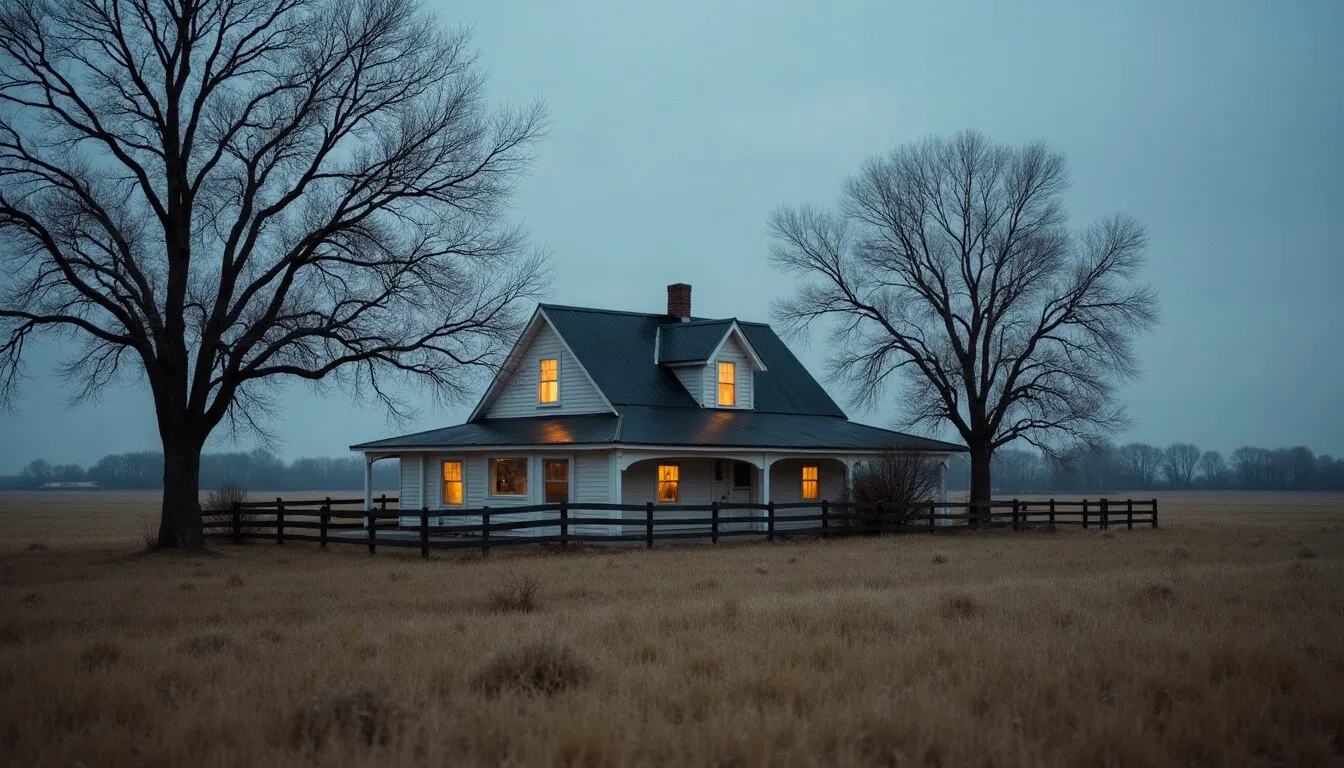
In Brandon the first hard cold snap of the year arrives like a bill nobody budgeted for. The feedlot crews break ice on the troughs, the grain dryer runs late, and somewhere on a quarter section a farmhouse furnace that rattled all last spring finally quits at two in the morning. Dry country far to the south has its own version of that night. On a small acreage outside Albuquerque, the days can be hot and the winter nights sharply cold, and one local option for readers there is Tru Mechanical Heating & Cooling LLC, which lists furnace, heat pump, ductless and water heater work on its pages.
The economic question is the same on both sides of the border: how much should a rural household or a small farm business spend keeping its heating, cooling and hot water running, and when does repair stop making sense? This piece walks through the costs and the risks in plain terms. It explains the trade-offs; it is not a quote, a product recommendation or a promise that any choice will save money.
Where heating and cooling sit on a rural property
On a farm or an acreage, heating and cooling equipment is rarely one machine. There is usually a furnace or a heat pump for the house, sometimes a separate unit for an addition or a converted shop, and a water heater that serves the kitchen, the laundry and, on many places, a mud room where people wash up after chores. Some properties add a ductless mini split to an office, a farm store or a bunkhouse, because running new ductwork to an outbuilding costs more than the room is worth.
That spread matters for the budget. A town house with one system has one point of failure. A rural property has several, often of different ages, bought by different owners, and serviced on no particular schedule.
It also matters for the work itself. In a high desert climate like the one around Albuquerque, the same household may need heat on a winter night and cooling on a summer afternoon, which puts steady wear on equipment across the whole year. Either way, the equipment is a working input, the way a stock waterer or a dryer fan is, and it should be costed like one.
What it costs and where the costs hide
The visible cost is the energy bill and the occasional service call. The hidden costs are the ones that turn up on the worst day of the season.
- Energy drift. Equipment that is dirty, poorly adjusted or nearing the end of its life tends to use more fuel or electricity for the same comfort. The drift is slow, so nobody notices it in a single month.
- Downtime. A furnace that fails during a cold week can mean space heaters, a frozen line in a back room, or a family sleeping in the one warm room. In a farmhouse that doubles as an office, it can mean lost work hours.
- Emergency timing. A breakdown in the first cold snap lands when every heating crew in the region is busiest. Waiting is a cost of its own.
- Knock-on damage. A failed water heater can leak into a floor. A house that loses heat for too long can split a pipe, and the repair to the wall is often larger than the repair to the equipment.
- Labour. On a farm, the person who stays home to meet a technician or haul in a space heater is not out checking cattle or fixing fence. That time has a value even when nobody writes it down.
Back-of-the-envelope. Say an illustrative rural household spends $2,000 a year on energy for heating, cooling and hot water. If neglected equipment runs about 10 per cent less efficiently, that is $200 a year of drift. A yearly maintenance visit at an illustrative $150 would more than cover itself in that case: over 5 years the drift adds up to $1,000 against $750 in visits. If the system is already running well and the drift is closer to 5 per cent, the same 5 years show $500 of drift against $750 in visits, and the case for a visit rests on catching a failure early rather than on the energy bill. These are round illustrative numbers, not data from any real household or company.
The energy bill is only half of the reasoning. The other half is the price of a breakdown on the wrong night, which no monthly bill shows.
Who carries the risk
On a family farm, the person who pays for the furnace is not always the person who suffers when it fails. That is where most of the friction comes from.
Owner and tenant
A farmhouse rented to a hired hand, a relative or a neighbour is a common arrangement on the Prairies and in rural New Mexico alike. The owner pays for the equipment, the tenant lives with its condition, and the energy bill may fall on either one. A tenant has little reason to report a furnace that is merely noisy, and an owner has little reason to replace one that still lights. The result is equipment that runs until it stops. A clear written understanding about who books maintenance and pays for repairs removes most of the later argument. A lawyer or a farm advisor can help with the wording of a lease.
The next generation
Succession brings the same problem in a different coat. When a farm passes to a son, a daughter or a buyer, the house usually goes with it, and so do the ages of its furnace, heat pump and water heater. A retiring couple may reasonably decide not to replace a system they will use for only a few more winters. The people taking over inherit that decision. Listing the age and service history of each unit when the farm changes hands is a small job that saves a large surprise.
The business side
Where a farm store, a processing room or an office shares the house system, a failure stops more than comfort. Customers do not linger in a cold store. The risk then moves from the household budget to the farm's income.
What to weigh before deciding
Most decisions come down to repairing what is there, replacing it, or adding a separate unit for one space. None is right everywhere.
| Option | Up-front cost band | Downtime risk afterward | Who it tends to suit |
|---|---|---|---|
| Repair the existing system | Low to moderate | Moderate to high if the unit is old | Owners with a younger unit, or a short horizon on the property |
| Replace the main system | High | Low in the early years | Owners planning to stay, or handing the farm to the next generation |
| Add a ductless unit for one space | Moderate | Low for that space | Additions, shops, offices and outbuildings without ductwork |
Before calling anyone, it helps to have a few answers ready:
- How old is each unit, and when was it last serviced?
- Has the energy bill crept up with no change in how the house is used?
- How often has the system needed a call in the last few winters?
- How long will you, or the next owner, be using this house?
- Would a failure in a cold week risk frozen pipes or damage to the building?
A good heating and cooling company will look at the whole system, explain what it found, and set out the options without pressure. It should also tell you when a repair is reasonable and when it is only buying a season. Permits and local rules for new equipment vary, so ask the local building department or the company doing the work what applies to your property.
Gas lines, refrigerant and electrical connections are work for trained professionals. Owners can keep filters changed, keep the space around equipment clear and note any odd smell or noise, but the rest belongs to the people qualified to do it.
Small acreage, large operation
The arithmetic shifts with scale. On a small acreage with one house and one water heater, a breakdown is a household problem: uncomfortable, sometimes expensive, but contained. The owner can usually run equipment longer and replace it when it fails, keeping frozen pipes and water damage in mind.
On a larger operation, with a main house, a rented second house, a shop and an office, the same equipment becomes a portfolio. Several units of different ages will fail at different times, and a planned replacement schedule starts to look cheaper than a string of emergency calls in January. Staggering replacements also spreads the cost, the way a grain farm spreads equipment purchases.
The climate changes the timing, not the logic. A Manitoba farm worries most about the heating side through a long winter. A property near Albuquerque has to think about both seasons, since a heat pump or a mini split may be carrying the house through summer heat and winter cold alike. In both places the question is the same: how much risk of a bad night is the household or the business willing to carry, and what does it cost to carry less?
The trade-off in one line
Spending a little each year on heating and cooling equipment buys down the risk of a costly failure, but only when the equipment is worth keeping. Know the age and history of every unit on the place, and make the repair or replace decision in a mild month, before the first cold snap makes it for you.

Reid Gauthier
Reid lives in Brandon, Manitoba, among grain elevators and feedlots. He writes about livestock and grain markets, feed costs and how prices are discovered.