
How a home EV charger fits into the economics of a farmhouse
A home EV charger on a farm is a small purchase on top of a bigger question: how much electrical capacity the farmstead has and who owns it.
 By Annelies Dekker6 min read
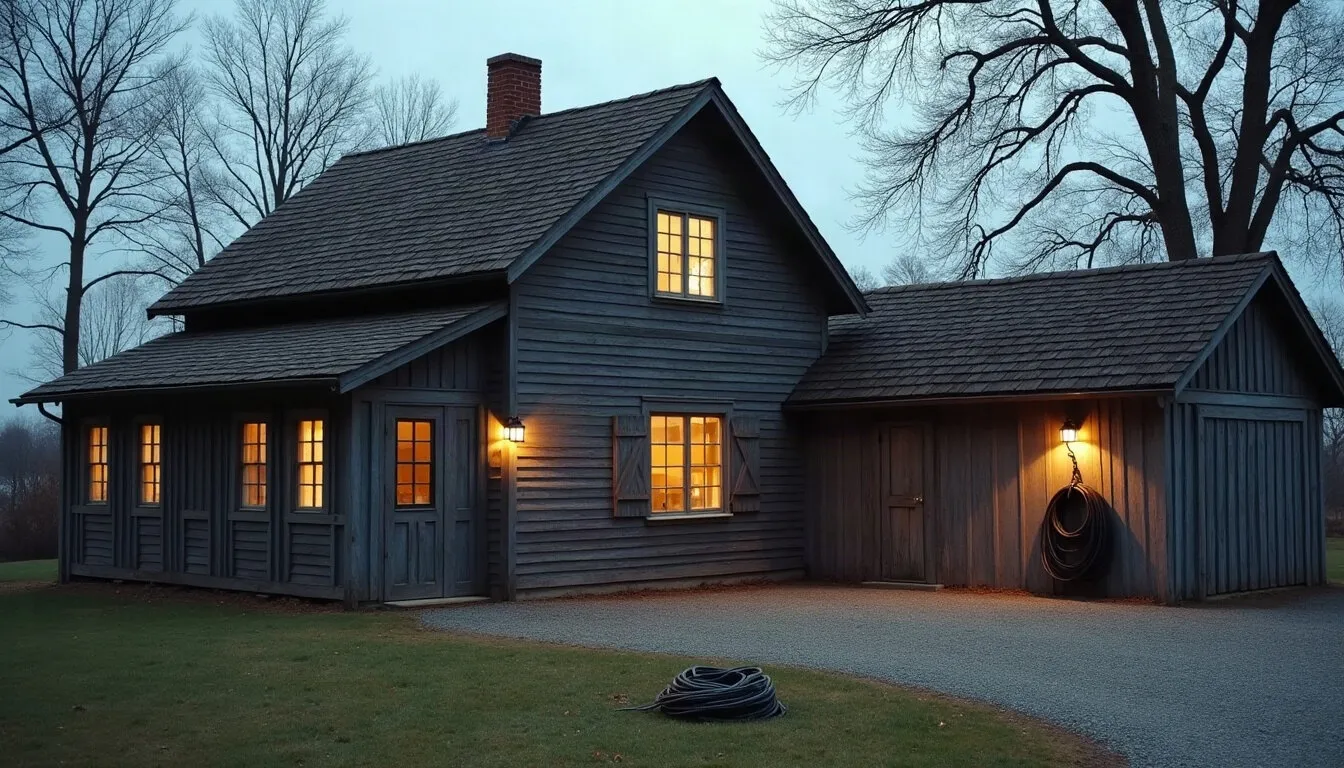
On a November evening near Woodstock, the yard light comes on over a farmhouse where three generations share one electrical service: the parents in the house, a son who has taken over the barn, and a daughter-in-law who has just bought an electric vehicle for the drive to town. The question at the kitchen table is less about the car than about the wiring behind it. For readers in Colorado, a local page on home EV charger installation Colorado Springs families can consult is a sensible first stop when planning that kind of job.
This piece looks at a home charger as a farm business decision: where it fits in the household's electrical load, what it costs beyond the equipment, and who should carry that cost. It explains trade-offs. It is not a quote, an electrical guide or a recommendation of any product or contractor.
Where a home charger sits in a farm's electrical picture
On many farms, the house, the shop and sometimes the barn all draw on power that arrives at the same place. Each addition over the years, a freezer here, a welder there, a heated waterer for the winter, has taken a share of the capacity that was there when the service was put in. A home EV charger is another such load, and a large, steady one when it is running.
There are broadly two ways to charge at home. The slow way uses an ordinary outlet and simply takes a long time. The faster way uses a dedicated charger on its own circuit, which needs more capacity from the electrical panel and must be installed by a licensed electrician, usually with a permit. Which one makes sense depends on how far the vehicle goes each day and how long it sits at home.
For a farm household, there is a third question that town households rarely face: what else is drawing power at the same time. Evening is when the house is busy, the barn may be running fans or heaters, and the vehicle is plugged in for the night. Whether the existing service can carry all of that comfortably is exactly what an electrician checks first.
What it costs, and where the costs hide
The visible costs are the charger itself and the electrician's work to install it. The less visible ones sit around that.
- Panel capacity. If the existing panel or service has little room left, adding a charger may mean upgrading it. That can be a larger job than the charger, and it is the main reason estimates for apparently similar installations differ.
- Distance. A charger far from the panel, in a detached garage or a machine shed, needs a longer run of cable and more work.
- Permits and inspection. Most places require them for this kind of electrical work; ask the local building department what applies.
- Timing. Electricity used for charging shows up on the farm's power bill, and on a shared meter the household has to decide whose budget it belongs to.
- Surroundings. A farm garage or shed is dustier, damper and busier than a suburban one. Where a charger sits, and whether it is protected from machinery backing up, livestock or road salt, can affect how long it lasts.
The hidden cost that matters most is often the panel. A charger quote that looks modest can grow once the electrician has counted the barn fans, the stock tank heaters and the shop compressor. That is not a sign of a poor estimate; it is the arithmetic of a property that has quietly added loads for decades. A household that knows this going in can treat the panel as its own decision, made on its own merits, rather than as an unwelcome surprise attached to a car.
Back-of-the-envelope. Say an illustrative household drives 80 km a day, and the vehicle uses 20 kWh per 100 km. That is 16 kWh to put back each night. On an ordinary outlet delivering a round 1.5 kW, that takes nearly 11 hours. On a dedicated charger delivering a round 7 kW, it takes well under 3 hours. If the vehicle sits in the yard for 12 hours every night, the slow option covers the need; if it goes out again for evening chores or a late trip to town, it may not. These are round illustrative numbers, not data from any real farm; the trade-off is between the up-front cost of faster charging and how much the household's schedule actually needs it.
Who carries the risk
On a multi-generation farm, the charger is rarely just one person's purchase, even if one person owns the vehicle. The electrical service belongs to whoever owns the property, and any panel upgrade becomes part of the farmstead's infrastructure, outlasting the car by many years.
That raises the planner's questions. If the parents own the house and the next generation drives the vehicle, who pays for the upgrade? If the farm is to be handed over in a few years, should the upgrade be treated as an investment in the property that the successor will inherit, or as a personal expense of the driver? There is no single right answer, but agreeing one before the electrician arrives avoids a quiet grievance later. A farm advisor, accountant or lawyer can help put the arrangement in writing if the amounts are significant.
Tenants face a simpler version. Someone renting a farmhouse usually needs the owner's permission for electrical work, and the improvement stays with the building. A written agreement about who pays and what happens at the end of the lease protects both sides.
What to weigh before deciding
It helps to split the decision into what to do now and what to plan for.
Do now
- Write down how far the vehicle goes on a normal day and how long it is parked at home.
- Ask a licensed electrician to look at the panel and the service and say how much capacity is left once barn, shop and house loads are counted.
- Find out from the local building department whether a permit is needed.
Plan for
- Whether a second vehicle, a farm vehicle or other new loads, such as a heat pump, are likely in the next several years. Planning capacity once is often cheaper than upgrading twice.
- Where the charger should go so that it still makes sense if the yard or the garage changes use.
- Who in the family will own and pay for the installation if the farm changes hands.
A good electrician will generally explain the load calculation in plain terms and describe the options, including whether slower charging would be enough. Those are fair things to ask of any contractor. The household should never attempt the wiring themselves; work at the panel is for licensed professionals.
How the arithmetic changes with place and scale
The logic is the same in southwestern Ontario and in Colorado, but the details differ. Cold winters affect both: vehicles use more energy in the cold, and a charger in an unheated building has to cope with it. In a dry, sunny place with cold snaps and big swings between day and night, such as the country around Colorado Springs, the household may also be thinking about solar or other additions that touch the same panel, which is another reason to plan capacity as a whole.
Scale matters too. A small acreage with one house and one vehicle may manage perfectly well with slow charging and no upgrade at all. A larger operation with several households on one yard, a shop running heavy tools and livestock equipment that cannot be switched off, is more likely to need a careful look at the service before anything is added. In both cases the cost of the charger itself is often the smallest part of the decision.
The trade-off in one line
A home charger is a small purchase sitting on top of a large question: how much electrical capacity the farmstead has and who owns it. Settle the load and the ownership first, and the charger decision usually becomes straightforward.

Annelies Dekker
Annelies lives near Woodstock, Ontario, close to the mixed farms her Dutch-Canadian family has worked for three generations. She writes about farm business, value chains and food waste.