
PaperPolicy notebook
A short history of farm business risk management programs in Canada
From crop insurance in 1959 to NISA, CAIS, the Growing Forward suite and Ontario's own program: how Canada's farm safety nets evolved and the design questions.
 By Duncan StrathearnFirst posted at this address on 6 min read
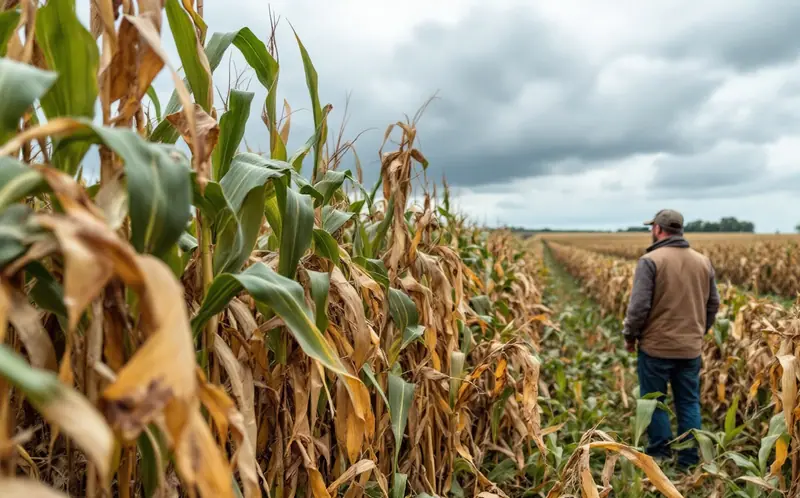
Farming is a business in which a single hailstorm, a border closure or a collapse in world prices can wipe out a year's income through no fault of the operator. Canadian governments have tried for more than half a century to soften those shocks without paying farmers to make poor decisions. The result is a long list of program names, many of them replaced within a few years of launch. Told in order, the history makes more sense than the acronyms suggest, because each program was a response to the weaknesses of the one before.
The early years: insuring the crop
The oldest piece is crop insurance, offered to farmers since 1959 under federal legislation and delivered by the provinces. It pays when yields fall below a farm's insured level because of drought, hail, frost, flood or disease. Premiums are shared between farmers and governments. Crop insurance covers production losses, not low prices, and for a long time livestock had no equivalent.
Through the following decades, governments added price stabilization schemes for particular commodities and paid large one-off amounts when crises hit. Those ad hoc payments were the pattern that later programs tried to replace with something more predictable.
The 1990s: savings accounts and revenue guarantees
In 1991 two new programs arrived together. The Net Income Stabilization Account, known as NISA, let farmers deposit part of their sales each year into an account, with matching government contributions. In poor years they could withdraw from it. The design rewarded farmers for building their own reserves, and it did not tell anyone what to grow.
The second program, the Gross Revenue Insurance Plan or GRIP, guaranteed revenue for grain, oilseed and specialty crop producers based on yields and longer-run average prices. It proved expensive, and it was criticised for influencing what farmers chose to seed, since some crops carried better guarantees than others. It was wound down in the middle of the decade.
When prices for hogs and grains fell sharply in 1998, the federal government added the Agricultural Income Disaster Assistance program, AIDA, for farms whose whole-farm income dropped steeply. Farmers found it complex and it was changed in 1999. In 2000 it was replaced by the Canadian Farm Income Program.
The 2000s: whole-farm margins
The Agricultural Policy Framework brought the Canadian Agricultural Income Stabilization program, CAIS, starting with the 2003 tax year. CAIS folded stabilization and disaster coverage into one whole-farm program based on margins: revenue minus allowable expenses. When a farm's margin in a given year fell below its historical reference margin, the program paid part of the gap. CAIS replaced NISA and the disaster program that had followed AIDA.
CAIS was criticised for slow payments, complexity, and the cost to farmers of keeping funds on deposit. As the next federal, provincial and territorial framework, Growing Forward, took shape in 2007 and 2008, CAIS was split into a set of separate tools.
The Growing Forward suite
| Program | What it covers | How it works |
|---|---|---|
| AgriStability | Large drops in whole-farm margin | Pays part of a fall below 85 per cent of the reference margin |
| AgriInvest | Small income declines and investment | Farmer deposits matched by governments in a savings account |
| AgriInsurance | Production losses from natural hazards | The crop insurance tradition, with premiums shared |
| AgriRecovery | Disasters not covered elsewhere | Case-by-case federal and provincial assistance |
The reference margin in AgriStability is an Olympic average: take the margins of the previous five years, drop the highest and the lowest, and average the remaining three. AgriInvest lets a farmer deposit up to 1.5 per cent of allowable net sales each year with a matching government contribution, so it is intended to handle the small dips that AgriStability no longer covers.
A worked example
Consider an illustrative hog farm whose margins over five years were $150,000, $180,000, $200,000, $210,000 and $260,000. Dropping the highest and lowest leaves $180,000, $200,000 and $210,000, for a reference margin of about $196,700. At 85 per cent, the trigger is about $167,200.
Now suppose a price slump cuts this year's margin to $120,000. The gap below the trigger is about $47,200. AgriStability pays a share of that gap, with governments covering a larger share for deeper losses. If the share averaged 70 per cent, the payment would be about $33,000. The farm would also have its AgriInvest balance to draw on.
The payment usually arrives after the farm's tax return and the program forms are processed, often many months after the loss. That timing is one of the most frequent complaints.
Ontario's own layer
Some provinces add programs of their own. Ontario ran a three-year pilot for grain and oilseed growers starting in 2007, based on the cost of production rather than historical margins. In 2011 the province made that program permanent and added a Risk Management Program for cattle, hog, sheep and veal producers. Producers pay premiums and receive payments when market prices fall below a support level linked to production costs. Edible horticulture growers have a self-directed program in which deposits into an account are matched by the province.
The design questions that keep returning
Moral hazard
Any program that pays when income falls can change behaviour. A farmer who knows a margin drop will be partly covered may take on more risk. Programs based on the whole farm and on historical averages reduce this effect, because they do not reward a particular crop or animal, but they cannot remove it.
Timeliness
A payment that arrives a year after a crisis may come too late to keep a farm solvent. Advance payments and interim claims help, but faster payments are less accurate and more often have to be clawed back.
Equity across sectors
Margin-based programs pay most to sectors with volatile prices, such as hogs, cattle and grains. Supply-managed sectors rarely trigger them. Cost-of-production programs, like Ontario's, tie support to costs that are averaged across a sector, so efficient farms gain more than high-cost ones. Each design moves money between sectors and between farm types, and each draws complaints from those who receive less.
Viability
Programs that keep paying a struggling farm can delay changes that would serve it better, such as switching enterprises or selling. Programs that pay too little leave sound businesses exposed to shocks they could not have avoided.
For more context, the farm business issue page covers the economics of running a farm, the policy notebook follows program frameworks, and the agri-food policy hub gathers explainers on the wider policy system. The lesson of fifty years of program changes is that no single tool covers every risk well. A savings account handles small dips cheaply, insurance handles weather, margin programs handle deep market slumps, and disaster aid catches what falls through. The arguments are mostly about where each layer starts and stops.