Shrinkflation and unit pricing: how to read the shelf label
When a package gets smaller but the price stays put, the shelf price hides the change. The unit price shows it, if you know where to look and what to compare.
 By Navdeep Grewal8 min read
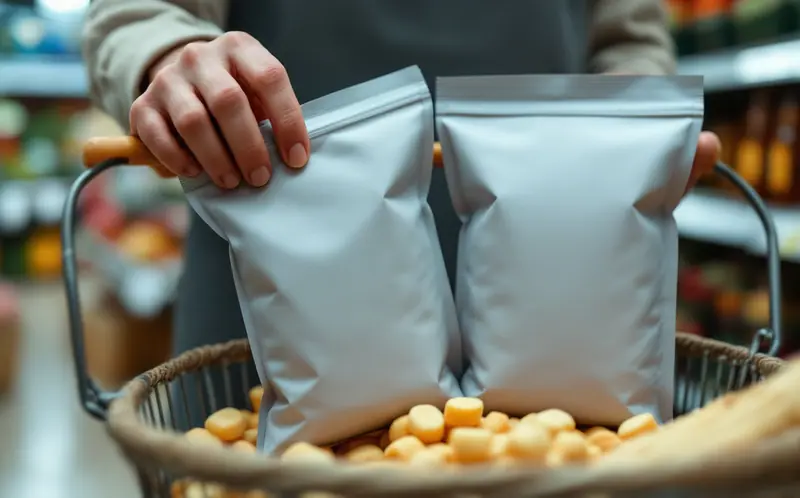
A box of crackers that used to hold 250 grams now holds 225. The price on the shelf tag has not moved, the box looks almost the same, and most shoppers will never notice. Economists call this shrinkflation, and it is one of the quieter ways a food price can rise. The tool that catches it is printed in small type on most shelf tags in Canada: the unit price. This piece explains what shrinkflation is, why manufacturers use it, how unit prices work in Canadian stores, and how to compare two products without a calculator.
Three ways to raise a price without changing the sticker
There are three related practices, and they are often lumped together.
- Shrinkflation. The package gets smaller, the price stays the same or falls by less than the size. The cost per gram goes up.
- Skimpflation. The package and price stay the same, but the contents get cheaper: less of a costly ingredient, a cheaper oil in place of butter, fewer pieces of meat in a frozen dinner, more breading on the fish. The cost per gram may not change, but you get less for it.
- A plain price increase. The package and recipe stay the same and the sticker goes up. This is the most visible option, which is exactly why firms sometimes avoid it.
None of these is illegal in Canada as long as the label states the true net quantity and the ingredient list is accurate. Federal labelling rules require the net quantity on the front of most prepackaged foods, in metric units. What the rules do not require is a warning that the quantity used to be larger.
Why manufacturers do it
The economics are simple. Shoppers remember the prices of the items they buy often. They tend not to remember package weights. A cereal that goes from $5.49 to $5.99 draws attention; a box that goes from 400 grams to 360 grams at $5.49 often does not, even though the second change raises the price per gram by about 11 per cent, more than the 9 per cent of the first.
There are also round-number prices to protect. A product that sells at $3.99 or $4.99 has a price point that retailers and shoppers both treat as a threshold. When ingredient, packaging or freight costs rise, cutting the size can keep the product at that price point.
Packaging lines matter too. Changing the size of a box or a bag means new tooling, new pallet patterns and new shelf space plans, so firms do not do it often. When they do change a package, they may take the opportunity to trim the quantity at the same time.
Shrinkflation is not always one-directional. Sizes sometimes grow again, often with a "bonus" or "new bigger size" flag. The unit price is the only way to tell whether a bigger box is a better deal or just a bigger box.
What the official statistics do with it
Statistics Canada adjusts the Consumer Price Index for changes in package size. When a product shrinks and its price holds, the agency treats the change as a price increase, because the shopper now pays more per unit of food. A Statistics Canada study of grocery items tracked in the CPI from 2021 to 2023 found that 29.6 per cent of the eligible items had shrunk at least once in that period. Of the cases it found, 77.6 per cent involved name-brand products and 22.4 per cent house brands. Margarine, pasta mixes, cookies and crackers, cheese and breakfast cereal were among the products with the most cases. The full write-up is on the Statistics Canada site.
So shrinkflation is already counted in measured food inflation. It is not a hidden extra on top of the official numbers. For how those numbers are built in the first place, see how food inflation is measured and forecast in Canada.
Unit pricing in Canadian stores
A unit price is the price of a product divided by its quantity: dollars per kilogram, cents per 100 grams, per litre, per 100 millilitres, or per item for things sold by count. On a typical shelf tag it sits in smaller type near the selling price.
The rules depend on where you shop. There is no federal law that requires grocery stores across Canada to show unit prices. Outside Quebec, unit pricing is voluntary. The large chains generally print unit prices on shelf tags, but the format is up to each retailer, and it is not always consistent within one store.
Quebec is the exception. Regulations under the province's Consumer Protection Act have required food retailers to show a price per unit of measure since the early 2000s, and the province later tightened the display rules. Under the current Quebec approach, the unit price must use a metric unit, and goods of the same nature must be shown in the same unit so that they can be compared directly. Where a store advertises a loyalty-member price, the shelf must also show the price for shoppers who are not in the program. Quebec's consumer protection office checks compliance.
Consumer groups and federal reviews have argued for a national approach. The Competition Bureau's 2023 study of the retail grocery market recommended that governments work together on consistent unit price labelling. Because retail display rules are largely provincial, a national standard would need the provinces to agree.
Where shelf tags trip people up
A unit price only helps if the two numbers being compared use the same unit. In stores without strict rules, these are the common traps:
- One product priced per 100 grams and its neighbour per kilogram. The numbers differ by a factor of ten and look unrelated.
- Paper towels or toilet paper priced per roll when rolls differ in sheet count and sheet size.
- Liquids priced per 100 millilitres on one tag and per litre on the next.
- Multipacks priced per pack, not per gram, so a 6 by 40 gram pack cannot be compared with a 250 gram bag.
- Sale tags that show the sale price but leave the unit price calculated at the regular price, or show no unit price at all.
- Loyalty prices that apply only to members, with the unit price calculated on the member price.
A worked example: three boxes of crackers
The numbers below are illustrative, chosen to show the method. They are not prices from any store.
| Product | Size | Shelf price | Price per 100 g |
|---|---|---|---|
| Brand A, old size | 250 g | $4.49 | $1.80 |
| Brand A, new size | 225 g | $4.49 | $2.00 |
| Brand A, family size | 400 g | $6.99 | $1.75 |
| Store brand | 300 g | $3.79 | $1.26 |
Brand A's move from 250 to 225 grams at the same shelf price is a 10 per cent cut in quantity and an 11 per cent rise in the price per gram. Nothing on the shelf price says so. The family size looks dearer at the till but is the cheapest name-brand option per gram. The store brand is cheapest of all, though whether it is the same product is a separate question about recipe and taste.
When the tags use different units, convert them to one unit before comparing. A cheese priced at $2.10 per 100 grams costs $21.00 per kilogram. A cheese priced at $18.90 per kilogram costs $1.89 per 100 grams. Move the decimal one place and the comparison takes a few seconds.
Spotting skimpflation
Unit prices cannot catch skimpflation, because the quantity has not changed. The ingredient list is the best tool. Ingredients in Canada are listed in descending order of their proportion by weight at the time they are added. If a chicken pie used to list chicken second and now lists it after potatoes and water, the recipe has shifted. If a "butter" cookie now lists vegetable oil ahead of butter, the same applies. The Nutrition Facts table can help as well: a drop in protein per serving in a meat or cheese product, at the same serving size, often points to less of the costly ingredient.
Common questions
Is shrinkflation a sign that retailers are raising margins?
Not on its own. Package sizes are set by manufacturers, and the cost pressures behind a smaller pack can be real. Whether retailers or manufacturers are widening margins is a separate question that needs financial data, covered in grocery margins in Canada.
Why are store brands less affected?
The Statistics Canada figures above show most shrinkflation cases in name brands. One plausible reason is that store brands compete on price per unit and are often placed next to the name brand on the shelf, so a smaller package would be easy to spot. Store brands also change packaging less often.
Do bigger packages always have a lower unit price?
No. They usually do, but sales on smaller sizes, and occasional pricing quirks, mean the large size is sometimes dearer per gram. The unit price on the tag, if it uses the same unit, settles it.
Can a shopper complain about a missing or wrong unit price?
In Quebec, the provincial consumer protection office handles complaints about price display. In other provinces, unit pricing is voluntary, so a missing unit price is not a breach of any rule, though a store will usually fix a tag that is wrong when it is pointed out.
The habit worth building is simple: before reaching for the item with the familiar shelf price, look one line down at the unit price, and make sure the tag beside it uses the same unit.

Navdeep Grewal
Navdeep is from Abbotsford, British Columbia, where his family grew berries. He covers food prices, grocery retail and food processing, with a weakness for unit-price labels.