
PaperFarm business
Why Canadian farms keep getting larger
Seventy years of census data show fewer, bigger, more capital-heavy farms in Canada. Here is what drives the trend and what it means for rural towns.
 By Reid GauthierFirst posted at this address on 5 min read
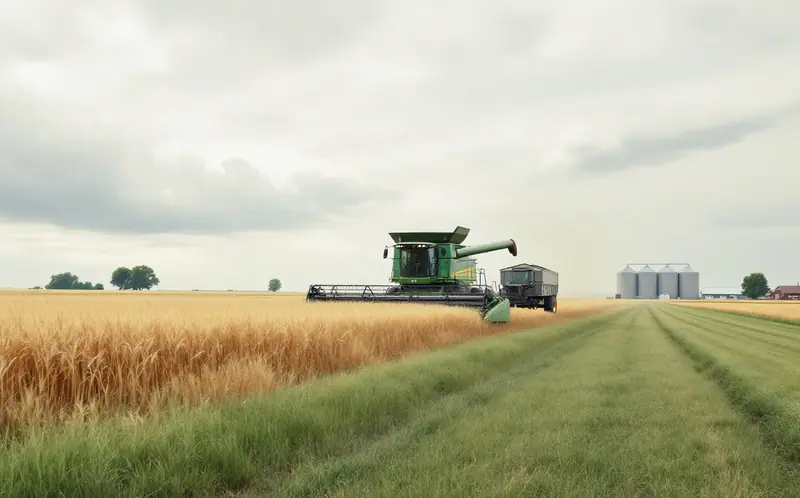
Drive any concession road in rural Canada and the pattern is easy to spot: an empty farmhouse here, a yard site turned into a field there, and a few large operations with machine sheds the size of hockey arenas. The census figures say the same thing more precisely. For seventy years the number of farms in Canada has fallen while the average farm has grown, and each farm has needed far more capital to run. This page looks at the numbers first, then at the reasons, and then at what it means for the people who live around the farms.
What the census shows
Statistics Canada counts farms every five years through the Census of Agriculture. The number of census farms peaked in 1941. Since then it has fallen at every census, while the total area farmed has stayed in a fairly narrow band. The same land is shared among fewer operators.
| Census year | Number of farms | Average farm size (acres) |
|---|---|---|
| 1941 | 732,832 | 237 |
| 1961 | 480,877 | 359 |
| 1981 | 318,361 | 511 |
| 2001 | 246,923 | 676 |
| 2006 | 229,373 | 728 |
| 2011 | 205,730 | 778 |
The steepest five-year fall on record came between 1956 and 1961, when the count dropped by about 94,000 farms, or 16.4 per cent. Between 2006 and 2011 it fell by 10.3 per cent. The average size rose 6.9 per cent over the same five years, and Saskatchewan's average farm reached 1,668 acres.
The money tells a sharper story than the acres. In 2010, farms with gross receipts of $500,000 or more made up 11.5 per cent of farms but brought in 67.9 per cent of all receipts. The 9,602 farms reporting receipts of $1 million or more were under 5 per cent of farms and took in almost half of all receipts. Statistics Canada valued total farm capital at about $308 billion in 2010, and land and buildings made up more than four fifths of it. Spread across the farms counted in 2011, that is roughly $1.5 million per farm, though the average hides a very wide range.
Why farms grow
Machines do more work per person
The basic driver is that one person with modern equipment can farm far more land than one person could in 1941. Tractors replaced horses, then grew larger. Combines, air seeders, sprayers with wide booms and, more recently, guidance systems let a small crew cover thousands of acres. Livestock farms followed a similar path with milking parlours, automated feeding and larger barns.
Each of these machines is expensive and is used only part of the year. The way to make it pay is to spread its cost over more acres or more animals.
A worked example: the cost of a combine
Take an illustrative grain farm that needs a combine worth $400,000. Allow about 12 per cent a year to cover depreciation, interest and insurance, so owning the machine costs $48,000 a year whether it harvests a little or a lot. These figures are round and for illustration.
| Acres harvested | Ownership cost per acre |
|---|---|
| 1,000 | $48 |
| 2,000 | $24 |
| 4,000 | $12 |
On a crop that might return a margin of tens of dollars an acre in an average year, the difference between $48 and $12 decides whether the farm makes money. The farm at 1,000 acres can hire custom harvesting or share a combine, and many do. But the pull towards renting or buying the neighbour's land is strong, and it is the same pull that operates on seeders, grain storage and trucking.
Land and capital feed each other
Larger farms can spread fixed costs, so they can often pay more for land or rent. When a neighbour retires, the land usually goes to an expanding farm rather than a new one. Rising land values add to the capital tied up in each farm, which makes it harder for a newcomer to start and easier for an existing farm, with equity to borrow against, to grow.
Fewer people want to farm
Off-farm jobs pay steady wages, and many farm children choose them. The age of farm operators has risen. In 2011, 48.3 per cent of operators were 55 or older, the first census in which that group was the largest, and only 8.2 per cent were under 35. When an older farmer retires without a successor, the land often joins a larger operation.
Markets reward volume and consistency
Processors, grain companies and retailers prefer to deal with suppliers who can deliver large, steady volumes to a specification. That favours bigger farms, although direct sales, organic production and specialty crops give some smaller farms a profitable niche.
What it means for rural communities
Fewer farm families means fewer customers on main street, fewer children in rural schools and fewer volunteers for the fire hall and the curling club. The money a large farm spends tends to flow to regional centres with machinery dealers and input suppliers rather than to the nearest village. At the same time, larger farms hire more paid workers, and in 2011 just over a third of farms reported paid labour. The rural economy shifts from many family farms to fewer farms employing people. The food and rural economy issue page follows those changes.
For entry into farming, the effect is plain. A farm worth well over a million dollars cannot be bought on wages. Most new farmers inherit, rent, or start in sectors where land and equipment needs are lower. Productivity gains, covered in measuring productivity in Canadian agri-food, are the other side of the same coin: fewer people producing more food.
Is there a limit?
Not every farm benefits from growing. Management becomes harder as an operation spreads over many parcels, hires more staff and borrows more. Weather risk does not shrink with size, and debt makes a bad year worse. Some studies of farm costs find that most of the savings from scale are captured at a moderate size, with smaller gains beyond. That helps explain why mid-sized family farms persist alongside very large operations, and why the farm business issue page spends as much time on management and succession as on acres.
The trend is likely to continue as long as machinery gets more productive and labour gets more expensive relative to capital. The question for policy is less whether farms grow than how to keep the door open for new farmers when each farm takes more capital to start.