
The economics of Ontario's craft cider makers
A small cidery is an orchard, a factory and a shop at once. How apples, licensing, taxes and retail channels shape the money behind a bottle of Ontario cider.
 By Navdeep GrewalFirst posted at this address on 5 min read
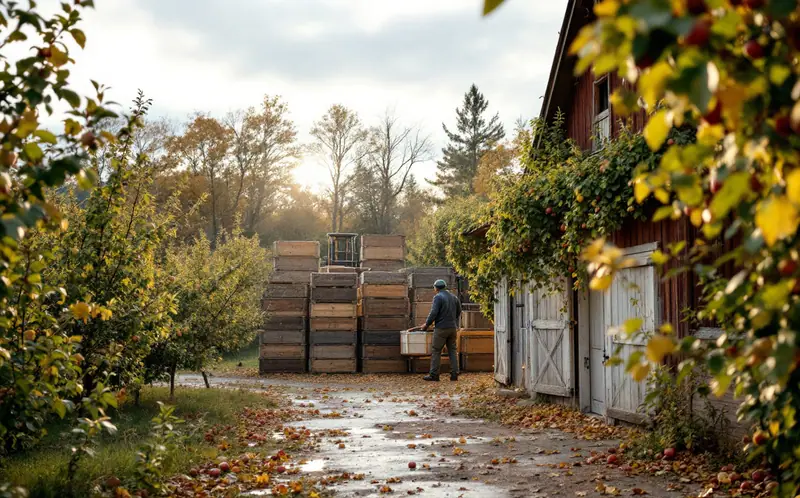
Cider is one of the oldest things farmers have done with apples, and in Ontario it has become one of the newer things they do with them again. A small cidery sits at an unusual junction: it is a fruit farm or a buyer of fruit, a beverage manufacturer, a licensed alcohol producer and, very often, a tourist stop. Each of those roles has its own costs and rules. Following the money from the orchard to the glass shows why some cideries make a decent living and others struggle.
Apples: fresh market fruit versus juice fruit
An apple grower has two broad markets. Fresh market fruit is sold whole to grocery stores and must meet grade standards for size, colour and blemishes. Fruit that misses those standards, or is surplus to fresh demand, goes to processing for juice, sauce and similar products, at a much lower price per kilogram.
For a grower, cider can add value to fruit that would otherwise go for juice prices. The flavour of a cider depends heavily on the apples, and fruit that is too small or marked for the fresh market can make perfectly good cider. Some cider makers also plant traditional cider varieties, which are high in tannin or acid and would be unappealing to eat fresh. Those trees take years to come into full production, which is a long wait for a new business.
The origin of the fruit also matters for tax. Under the federal Excise Act, 2001, cider made by fermenting apples counts as wine, and wine produced in Canada wholly from agricultural or plant product grown in Canada is exempt from federal excise duty. A cider made from imported concentrate does not qualify for that exemption. So a cider maker's sourcing decision has a direct effect on its costs, beyond the price of the fruit.
The cidery as a farm business
Many craft cideries in Ontario are run by orchard families who added a cidery to the farm. That brings advantages: access to their own fruit at cost, land for a tasting room, and a story that customers like. It also adds a second, quite different business to the farm. Cider making needs a press, tanks, cold storage, a bottling or canning line, laboratory checks for quality, and someone with time and skill to run them, usually during the same autumn weeks as harvest.
The capital cost is the main hurdle. Equipment can be bought used or shared, and some makers start with contract pressing or bottling, but a business that wants to grow eventually needs its own production space.
Licensing and retail channels
Alcohol is regulated by the province. In Ontario, cider makers operate under the same licensing framework as wineries, which means they need a manufacturer's licence and must follow provincial rules on production, record keeping and sales.
A licensed cidery has a few ways to reach customers.
- Its own retail store on site, often attached to a tasting room. The cidery sets the shelf price and keeps the full retail margin, less taxes, but it carries the cost of staff and opening hours.
- The Liquor Control Board of Ontario (LCBO), the provincial retailer with stores across the province. A listing brings wide reach, but the LCBO applies its markup and the cidery must meet its volume, packaging and delivery requirements.
- Licensed restaurants and bars, which buy for service and often like to list local products.
For a small cidery the choice is a trade-off between margin and volume. Farm-gate sales earn the most per bottle but depend on visitors. Province-wide retail sells far more but leaves less per bottle.
Taxes and markups in general terms
Between the cidery's own price and the shopper's price sit several layers: the retailer's markup, provincial levies and fees, container deposits where they apply, and sales tax. In Ontario the harmonized sales tax applies to alcoholic beverages. The details change from time to time, so the useful point is the structure: for a bottle sold through the provincial retailer, a large part of the shelf price goes to the retailer and to taxes before the producer is paid.
A worked example: one bottle, two routes
The numbers below are illustrative round figures, not data from any real cidery. Assume a 750 mL bottle sells for $14.00 including sales tax, whether at the farm store or in a retail store.
| Cost or revenue per bottle | Farm store | Through provincial retail |
|---|---|---|
| Shelf price including tax | $14.00 | $14.00 |
| Sales tax and retail markup, levies | $1.60 | $7.00 |
| Cidery receives | $12.40 | $7.00 |
| Apples (about 1.1 kg of juice-grade fruit) | $0.40 | $0.40 |
| Bottle, closure and label | $1.20 | $1.20 |
| Pressing, fermentation, labour and overhead | $2.40 | $2.40 |
| Selling cost (store staff, or delivery and marketing) | $1.50 | $0.80 |
| Margin to the cidery | $6.90 | $2.20 |
In this example a farm-store bottle earns about three times the margin of one sold through retail. But the farm store might sell 6,000 bottles in a season, while a province-wide listing could sell several times that. A cidery selling 6,000 bottles at the farm and 20,000 through retail would earn $41,400 plus $44,000, before paying for the equipment.
Notice how small the apple cost is. Even if the cidery paid fresh-market prices, say $1.00 for the fruit, the margin would shrink only modestly. The economics of craft cider turn far more on packaging, labour, scale and the sales channel than on the price of apples.
Tourism links
Cideries in orchard districts often draw visitors who come for apple picking, farm markets and scenic drives. A tasting room can sell cider, food and merchandise, and it builds a customer list for later sales. Regional tourism groups tend to welcome cideries because they extend the visitor season into the autumn and give people another reason to stop. The catch is that tourism traffic is seasonal and weather-dependent, and staffing a tasting room through quiet weekdays is costly.
What decides whether a cidery pays
A few factors separate cideries that thrive from those that do not:
- Securing fruit at a sensible cost, ideally from the farm's own orchard or long-term contracts.
- Keeping the capital outlay in step with sales, rather than building capacity ahead of demand.
- Balancing high-margin farm-gate sales with volume through wider retail.
- Consistent quality from batch to batch, which retailers and repeat customers expect.
Cider's growth also gives apple growers another outlet for fruit that would otherwise earn juice prices, which is part of why the sector draws interest beyond the cideries themselves. For a broader view of selling food close to home, see local food: what drives demand and what gets in the way. More on jobs and businesses in farm country is under food and rural economy, and longer reading is on the papers shelf.